
Medicated Skin Care Products Monograph
Help on accessing alternative formats, such as Portable Document Format (PDF), Microsoft Word and PowerPoint (PPT) files, can be obtained in the alternate format help section.
 (PDF Version - 206 KB)
Date
2024-08-28
Foreword
This monograph is intended to replace the existing Medicated skin care products monograph of December 7, 2018. This monograph describes the requirements necessary to receive market authorization [i.e. a Drug Identification Number (DIN) or a Natural Product Number (NPN)], for medicated skin care products. The monograph identifies the permitted medicinal and non-medicinal ingredients, concentrations, indications, directions and conditions of use for these products to be market authorized without the submission to Health Canada of additional evidence. The monograph does not apply to products intended to be rinsed off (e.g. soaps, shampoos). Products which do not meet the criteria outlined in this document can apply for market authorization outside of the monograph stream.
Applicants are reminded that medicated skin care products, like other non-prescription drugs or natural health products, are subject to the Food and Drug Regulations or the Natural Health Products Regulations administered by the Natural and Non-prescription Health Products Directorate (NNHPD). This includes requirements related to labelling, manufacturing and product specifications. Additional information on labels, outside of those specified in the monograph, such as additional directions for use and/or non-therapeutic claims are acceptable as long as they meet the Guidelines for the Nonprescription and Cosmetic Industry Regarding Non-therapeutic Advertising and Labelling Claims, the Guidelines for Consumer Advertising of Health products for Nonprescription drugs, Natural Health Products, Vaccines and Medical Devices, and are not false, misleading or counterintuitive to the use of the product.
Notes:
- Text in parentheses is additional optional information which can be included on the label at the applicant's discretion.
- The solidus (/) indicates that the terms and/or the statements are synonymous. Either term or statement may be selected by the applicant on the label.
Medicinal Ingredient(s)
Medicated skin care products are classified as natural health products (NHPs) if they contain only ingredients from Tables 1 and/or 2 and no ingredient from Table 3. Applicants applying for an NPN can access the appropriate forms and guidance at: https://www.canada.ca/en/health-canada/services/drugs-health-products/natural-non-prescription.html.
Medicated skin care products are classified as non-prescription drugs (NPDs) if they contain at least one ingredient from Table 3 at a quantity listed. Applicants applying for a DIN can access the appropriate forms and guidance at: https://www.canada.ca/en/health-canada/services/drugs-health-products/drug-products/applications-submissions/guidance-documents.html.
Proper name(s), Common name(s), Source information
| Proper name(s)1 | Common name(s)1 | Source information1 | Quantity2 | |||
|---|---|---|---|---|---|---|
| Source ingredient(s) | Source material(s) | Part(s) | Preparation(s) | |||
| Acetic acid, zinc salt |
|
|
N/A | N/A | N/A | 0.1-2% |
| Adeps solidus |
|
N/A | Adeps solidus3 | N/A | N/A | 50-100% |
| Aluminum hydroxide |
|
Aluminum hydroxide3 | N/A | N/A | N/A | 0.15-5%4 |
| Avena sativa |
|
N/A | Avena sativa | Seed | Dry | 1-100%5 |
|
|
Urea3 | N/A | N/A | N/A | 10% |
| Carbonic acid sodium salt (1:1) |
|
Sodium bicarbonate3 | N/A | N/A | N/A | 1-100% |
| Carbonic acid, zinc salt (1:1) | Zinc carbonate | Zinc carbonate3 | N/A | N/A | N/A | 0.2-2% |
| (2,5-Dioxo-4-imidazolidinyl)urea |
|
Allantoin3 | N/A | N/A | N/A | 0.5-2% |
| Iron oxide (Fe2O3), mixture with zinc oxide | Calamine | Calamine3 | N/A | N/A | N/A | 1-25% |
| Kaolin |
|
Kaolin3 | N/A | N/A | N/A | 4 - 20% |
|
|
Lactic acid3 | N/A | N/A | N/A | 2 - 5% |
|
|
N/A | Ovis aries | Wool | N/A | 12.5-50% |
| Olea europaea |
|
N/A | Olea europaea | Fruit flesh | Fresh | 50-100% |
| 1,2,3-Propanetriol |
|
Glycerol3 | N/A | N/A | N/A | 20-45% |
| Prunus dulcis |
|
N/A | Prunus dulcis | Seed | Fresh | 50-100% |
| Theobroma cacao |
|
N/A | Theobroma cacao | Seed | Fresh | 50-100% |
| Zea mays |
|
N/A | Zea mays3 | Seed | Dry | 10-98% |
| Zinc oxide |
|
Zinc oxide3 | N/A | N/A | N/A |
1 - 25% (Zinc oxide) 25 - 40% (Zinc oxide ointment) |
1At least one of the following references was consulted per proper name, common name, and source material: RCS 2023; USP-NF 2023; Nikitakis and Lange 2016; Sweetman 2017.
22Quantity can be expressed as percentage weight by weight (% w/w), percentage volume by volume (% v/v) or percentage weight by volume (% w/v), depending on the product formulation. At least one of the following references was consulted for the dosage: US FDA 2021; Krinsky 2017; Purnamawati et al. 2017; Sweetman 2017; Rawlings and Lombard 2012; Leung and Foster 2010.
3Ingredient must be pharmacopoeial grade (for a list of acceptable pharmacopoeial grades, see the Quality of Natural Health Products Guide).
4The quantity listed applies to aluminum hydroxide gel (US FDA 2021).
5The minimum concentration is 0.007% as a NHP or 0.003% when mixed with 30-35% of Mineral oil as a NPD, once further diluted (see directions for use section) (US FDA 2021).
| Proper name(s)2 | Common name(s)2 | Source information2 | Quantity3 | ||
|---|---|---|---|---|---|
| Source material(s) | Part(s) | ||||
| Cod liver oil |
|
N/A | Gadidae5 | Liver | 5-14%4 |
1Cod liver oil is not permitted as a single medicinal ingredient as this ingredient is not sufficient on its own to support the efficacy of the product.
2The following references were consulted for the proper name, common names, and source information: RCS 2023; USP-NF 2023; Sweetman 2017; Nikitakis and Lange 2016.
3Quantity is expressed as percentage volume by volume (% v/v). The following reference was consulted for the dosage: US FDA 2021.
4The quantities of vitamin A and vitamin D provided by the cod liver oil in the product must not exceed 3000 µg RAE vitamin A (10 000 IU) and 10 µg vitamin D/cholecalciferol (400 IU) per day (US FDA 2021).
5The species common names and not the family could be listed on the label.
| Proper name(s) | Common name(s) | Quantity |
|---|---|---|
|
Dimethicone | 1-30% |
| Mineral oil |
|
50-100%1 |
| Petrolatum |
|
30-100% |
| White petrolatum |
|
30-100% |
1The concentration should be 30-35% when mixed with Colloidal oatmeal.
Route of Administration
Topical
Dosage Form(s)
Acceptable dosage forms for NHPs
- Cream; Gel; Liquid; Lotion; Oil; Ointment; Paste; Powder; Salve; Solution; Spray; Stick; Suspension; Topical liquid; Wipe
Acceptable dosage forms for NPDs
- Cream; Gel; Lotion; Oil; Ointment; Paste; Powder; Solution; Spray; Stick; Suspension; Wipe
Use(s) or Purpose(s)
Self-Care Framework Category I Uses or Purposes:
Products containing allantoin, almond oil, cocoa butter, corn starch, dimethicone, glycerine, hard fat, lactic acid, lanolin, mineral oil, olive oil, petrolatum, white petrolatum, and/or urea
Temporarily protects and helps relieve minor skin irritation and itching (US FDA 2021, Krinsky 2017).
Products containing allantoin, cocoa butter, hard fat, lanolin, mineral oil, petrolatum and/or white petrolatum
Temporarily protects and helps relieve minor skin irritation and itching due to minor cuts, scrapes and burns (US FDA 2021).
Products containing aluminum hydroxide, calamine, kaolin, zinc acetate, zinc carbonate and/or zinc oxide
Temporarily dries the oozing and weeping and helps relieve minor skin irritation and itching due to poison ivy/oak/sumac (US FDA 2021).
Products containing colloidal oatmeal
Temporarily protects and helps relieve minor skin irritation and itching due to rashes, eczema, poison ivy/oak/sumac, and insect bites (US FDA 2021).
Products containing sodium bicarbonate
Temporarily protects and helps relieve minor skin irritation and itching due to poison ivy/oak/sumac, and insect bites (US FDA 2021).
Products containing colloidal oatmeal and mineral oil in combination (NPD only)
Temporarily protects and helps relieve minor skin irritation and itching due to rashes and/or eczema (US FDA 2021)
Note: Product labels must contain at least one of the above health (therapeutic) claims. Claims that are non-therapeutic in nature such as “relieves/soothes dry skin” or “protects against chapping, cracking and roughness of skin due to dryness” are acceptable as additional information on the label (but not on the licence for NHPs), provided that the claims are verifiable and not misleading. Please consult the Guidelines for the nonprescription and cosmetic industry regarding non-therapeutic advertising and labelling claims published by Ad Standards Canada for more information.
Dose(s)
Subpopulation(s)
Products containing allantoin, calamine, cocoa butter, cod liver oil, corn starch, colloidal oatmeal, hard fat, kaolin, lanolin, zinc carbonate and/or zinc oxide
Infants 0 to 12 months, Children 1 to 11 years, Adolescents 12 to 17 years, Adults 18 years and older
Products containing almond oil, aluminum hydroxide, dimethicone, glycerine, lactic acid, mineral oil, olive oil, petrolatum, urea and/or white petrolatum
Infants 6 to 12 months, Children 1 to 11 years, Adolescents 12 to 17 years, Adults 18 years and older
Products containing sodium bicarbonate and/or zinc acetate
Children 2 to 11 years, Adolescents 12 to 17 years, Adults 18 years and older
Quantity(ies)
See Tables 1, 2, and 3 above.
Permitted combinations
NHPs:
- Any two or more of the NHP ingredients (Tables 1 and 2) may be combined, provided each ingredient in the combination is within the concentration specified above and meet all the monograph requirements (US FDA 2021).
NPDs:
- Any two or more of the NPD ingredients (Table 3) may be combined, provided each ingredient in the combination is within the concentration specified above and meet all the monograph labelling requirements (US FDA 2021).
- The following NHP ingredients from Tables 1 and 2, Allantoin, Cocoa butter, Cod liver oil, Glycerin, Hard fat and/or Lanolin, may be combined with NPD ingredients from Table 3 provided each ingredient in the combination is within the concentration specified above and meet all the monograph labelling requirements (US FDA 2021).
- The NHP ingredient from Table 1, Colloidal oatmeal, at a minimum concentration of 0.003%, may be combined with the NPD ingredient, Mineral oil, from Table 3 at a concentration of 30-35%, provided all monograph labelling requirements are met (US FDA 2021).
Direction(s) for use
Products intended for direct application without dilution (excluding the colloidal oatmeal and sodium bicarbonate products used as a soak in a bath or as a wet dressing) (US FDA 2021)
Apply to affected area as needed.
Colloidal oatmeal products used as a soak in a bath (US FDA 2021)
- Using warm water turned on at full force, slowly sprinkle (applicant to insert quantity to be used) under running water.
- Stir thoroughly to prevent clumping and settling.
- Soak affected area for 15 to 30 minutes as needed or as directed by a health care practitioner.
- Pat dry (do not rub) to keep a thin layer on the skin.
Note: Applicant must provide adequate directions to allow consumers to obtain a solution containing: For tub bath/infant bath: a minimum of 0.007% colloidal oatmeal or 0.003% colloidal oatmeal when in combination with mineral oil. For foot bath: a minimum of 0.25% colloidal oatmeal.
Sodium bicarbonate products used as a soak in a bath (US FDA 2021)
- Dissolve 250 to 500 mL (1 to 2 cups) in a tub of warm water.
- Soak for 10 to 30 minutes as needed or as directed by a health care practitioner.
- Pat dry (do not rub) to keep a thin layer on the skin.
Colloidal oatmeal and sodium bicarbonate products used as a wet dressing (US FDA 2021)
- Using warm water turned on at full force, slowly sprinkle (applicant to insert quantity to be used) under running water.
- Stir thoroughly to prevent clumping and settling.
- Soak a clean, soft cloth in the mixture.
- Apply cloth loosely to affected area for 15 to 30 minutes.
- Repeat as needed.
- Discard mixture after each use.
Note: Applicant must provide adequate directions to allow consumers to obtain a solution containing a minimum of 0.25% colloidal oatmeal or sodium bicarbonate.
Sodium bicarbonate products requiring dispersal in water prior to application as a paste (US FDA 2021)
- Add water to form a paste.
- Apply to affected area as needed.
Products in a spray form
Avoid inhaling or exposing others to spray.
Duration(s) of Use
No statement is required.
Risk Information
Caution(s) and warning(s)
All products
- For external use only (US FDA 2021).
- When using this product avoid contact with eyes. If contact occurs, rinse thoroughly with water (US FDA 2021).
- Stop use and ask a health care practitioner/health care provider/health care professional/doctor/physician if symptoms worsen or last for more than 7 days (US FDA 2021).
- Keep out of reach of children. If swallowed, call a poison control centre or get medical help right away.
Products containing colloidal oatmeal or sodium bicarbonate (when labelled for use as a soak or wet dressing)
When using this product soaking too long may over-dry the skin (US FDA 2021).
Products containing 3% lactic acid or more
When using this product limit sun exposure and apply a sunburn protectant for a week after use, as this product may increase your skin's sensitivity to the sun.
Products in powder form
When using this product keep powder away from face to avoid inhalation, which can cause breathing problems (US FDA 2021).
Contraindication(s)
Products in a powder form
Do not use on broken skin (US FDA 2021).
Products used to temporarily protect minor cuts, scrapes and/or burns
Do not use on deep or puncture wounds, animal bites or serious burns (US FDA 2021).
Known adverse reaction(s)
No statement required.
Non-medicinal ingredients
Ingredients must be chosen from the current Natural Health Products Ingredients Database (NHPID) and must meet the limitations outlined in that database, the Food and Drug Regulations, and the current Cosmetic Ingredient Hotlist, when relevant.
Storage conditions
Must be established in accordance with the requirements described in the Natural Health Products Regulations or the Food and Drug Regulations.
Specifications
This monograph describes those requirements that are specific to this class of non-prescription drugs and to natural health products (NHPs). Any change to the manufacturing process that impacts the safety and efficacy of the ingredients, such as the use of novel technology (e.g. nanotechnology), requires supporting data and will be reviewed outside the monograph.
For products containing a Table 1 and 2 NHP medicinal ingredient
The finished product specifications must be established in accordance with the requirements described in the NNHPD Quality of Natural Health Products Guide. The medicinal ingredient must comply with the requirements outlined in the NHPID.
For products containing a Table 3 NPD medicinal ingredient
Requirements described in the Regulations to the Food and Drugs Act must be met.
For products containing a Table 1 and Table 2 NHP medicinal ingredient:
Example of Product Facts Table:
Consult the Guidance Document, Labelling of Natural Health Products for more details.

For products containing a Table 3 NPD medicinal ingredient:
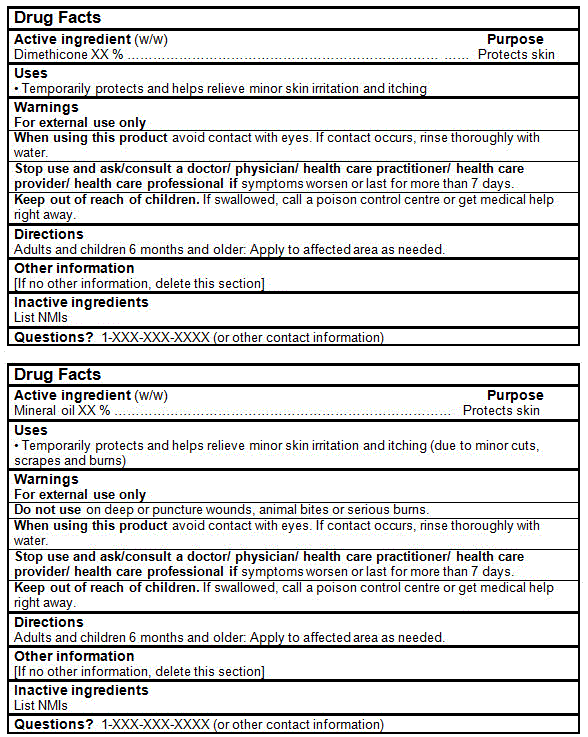
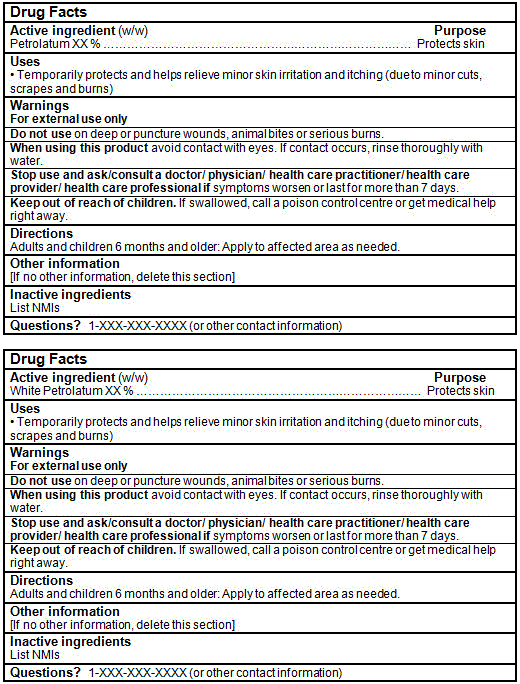
Drug Facts Tables (Format Optional for Self-Care Category I)


References
- Ad Standards 2018. Guidelines for Consumer Advertising of Health products for Nonprescription drugs, Natural Health Products, Vaccines and Medical Devices. [Accessed 2024 January 25]. Available from: https://adstandards.ca/wp-content/uploads/2020/02/Consumer-Advertising-Guidelines-for-Marketed-Health-Products-2020.pdf
- Ad Standards 2016. Guidelines for the Nonprescription and Cosmetic Industry Regarding Non-therapeutic Advertising and Labelling Claims. [Accessed 2024 January 25]. Available from: https://adstandards.ca/wp-content/uploads/2020/02/Guidelines-for-Nonprescription-and-Cosmetic-Industry-EN.pdf
- Danby SG, AlEnezi T, Sultan A, Lavender T, Chittock J, Brown K, Cork MJ 2013. Effect of olive and sunflower seed oil on the adult skin barrier: Implications for neonatal skin care. Pediatric Dermatology 30:42-50.
- Health Canada 2015: Quality of Natural Health Products Guide. Health Canada, May 2015. [Accessed 2024 July 21]. Available from: https://www.canada.ca/en/health-canada/services/drugs-health-products/natural-non-prescription/legislation-guidelines/guidance-documents/quality-guide.html
- Krinsky DL, Ferreri SP, Hemstreet B, Hume AL, Newton GD, Rollins CJ, Tietze KJ. Handbook of Nonprescription Drugs: An interactive approach for Self-Care, 19th edition. Washington (DC): American Pharmaceutical Association; 2017.
- Leung AY, Foster S. Encyclopedia of Common Natural Ingredients Used in Food, Drugs, and Cosmetics, 3rd edition. Hoboken (NJ): John Wiley and Sons, Inc.; 2010.
- Nikitakis J, Lange B, editors. International Cosmetic Ingredient Dictionary and Handbook. 16th edition. Washington (DC): Cosmetic, Toiletry and Fragrance Association; 2016.
- Rawlings AV and KJ Lombard 2012. A review on the extensive skin benefits of mineral oil. Internal Journal of Cosmetic Science 34(6):511-518.
- RSC 2023: Royal Society of Chemistry. The Merck Index Online. [Accessed 2024 July 21]. Available from: https://merckindex.rsc.org/
- Sweetman SC, editor. Martindale: The Complete Drug Reference, 39 th edition. Grayslake (IL): Pharmaceutical Press; 2017.
- US FDA 2021: U.S. Food and Drug Administration. Over-the-Counter (OTC) Monograph M016: Skin Protectant Drug Products for Over-the-Counter Human Use. Washington (DC): U.S. Food and Drug Administration, Department of Health and Human Services; 2021. [Accessed 2024 July 21]. Available from: https://www.accessdata.fda.gov/drugsatfda_docs/omuf/OTCMonograph_M016SkinProtectantDrugProductsforOTCHumanUse09242021.pdf
- USP-NF 2023: United States Pharmacopeia and the National Formulary. Rockville (MD): United States Pharmacopeial Convention, Inc.; 2023.