
RESVERATROL
Help on accessing alternative formats, such as Portable Document Format (PDF), Microsoft Word and PowerPoint (PPT) files, can be obtained in the alternate format help section.
 (PDF Version - 91 KB)
This monograph is intended to serve as a guide to industry for the preparation of Product Licence Applications (PLAs) and labels for natural health product market authorization. It is not intended to be a comprehensive review of the medicinal ingredient.
Notes
- Text in parentheses is additional optional information which can be included on the label at the applicant's discretion.
- The solidus (/) indicates that the terms and/or statements are synonymous. Either term or statement may be selected by the applicant on the label.
Date
January 10, 2025
Proper name(s), Common name(s), Source information
| Proper name(s) | Common name(s) | Source information | |||
|---|---|---|---|---|---|
| Source ingredient(s) | Source material(s) | Part(s) | Preparation(s) | ||
|
Resveratrol | N/A | Reynoutria japonica | Root | N/A |
| N/A | Vitis vinifera | Fruit | N/A | ||
| Resveratrol | N/A | N/A | Synthetic | ||
References: Proper names: RSC 2024; PubChem 2023; Common name: RSC 2024; Source information: RSC 2024; USDA 2024; La Porte et al. 2010; Bertelli and Das 2009; Dani et al. 2007.
Route of Administration
Oral
Dosage Form(s)
This monograph excludes foods or food-like dosage forms as indicated in the Compendium of Monographs Guidance Document.
Acceptable dosage forms for oral use indicated in the dosage form drop-down list of the web-based Product Licence Application form for Compendial applications.
Use(s) or Purpose(s)
- Source of (an) antioxidant(s)/Provides (an) antioxidant(s) (Ghanim et al. 2010; Rocha et al. 2009).
- Source of (an) antioxidant(s)/Provides (an) antioxidant(s) that help(s) fight/protect (cell) against/reduce (the oxidative effect of/the oxidative damage caused by/cell damage caused by) free radicals (Ghanim et al. 2010; Rocha et al. 2009).
Note: If resveratrol is combined with other medicinal ingredients with antioxidant properties, there is an option to use the claims in plural. The singular should be used when the product only contains one chemical substance (e.g., resveratrol) as the medicinal ingredient associated with the claim.
Dose(s)
Subpopulation(s)
Adults 18 years and older
Quantity(ies)
Not to exceed 1 gram of resveratrol, per day (Cottart et al. 2013; Brown et al. 2010; Gaby 2006).
Direction(s) for use
No statement required.
Duration(s) of Use
Products providing more than 500 mg of resveratrol, per day
Ask a health care practitioner/health care provider/health care professional/doctor/physician for use beyond 3 months (Harper et al. 2021; Mansour et al. 2021; Hassan et al. 2023).
Risk Information
Caution(s) and warning(s)
- Ask a health care practitioner/health care provider/health care professional/doctor/physician before use if you are pregnant or breastfeeding.
- Ask a health care practitioner/health care provider/health care professional/doctor/physician before use if you are taking medications or any other health products, as resveratrol may alter their effectiveness (Bedada and Nearati 2015; Brasnyó et al. 2011; Chow et al. 2010).
Contraindication(s)
No statement required.
Known adverse reaction(s)
Products providing more than 500 mg of resveratrol, per day
When using this product you may experience gastrointestinal discomfort/disturbances (Brown et al. 2010; Chow et al. 2010).
Non-medicinal ingredients
Must be chosen from the current Natural Health Products Ingredients Database (NHPID) and must meet the limitations outlined in the database.
Storage conditions
Must be established in accordance with the requirements described in the Natural Health Products Regulations.
Specifications
- The finished product specifications must be established in accordance with the requirements described in the Natural and Non-prescription Health Products Directorate (NNHPD) Quality of Natural Health Products Guide.
- The medicinal ingredient must comply with the requirements outlined in the NHPID.
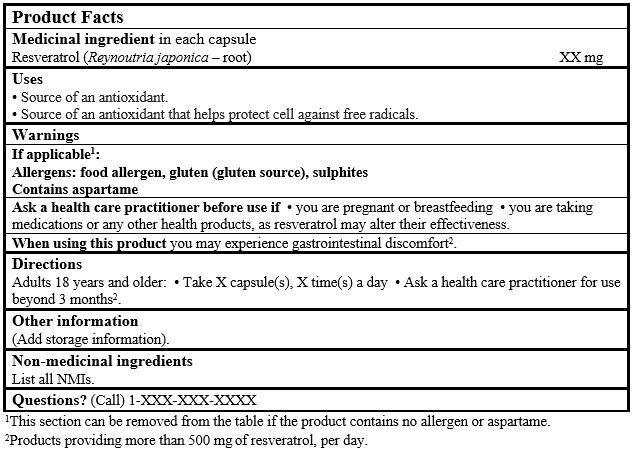
EXAMPLE OF PRODUCT FACTS:
Consult the Guidance Document, Labelling of Natural Health Products for more details.
References cited
- Bedada SK, Nearati P. Effect of resveratrol on the pharmacokinetics of carbamazepine in healthy human volunteers. Phytother Res. 2015;29(5):701-706.
- Bertelli AA, Das DK. Grapes, wines, resveratrol, and heart health. Journal of Cardiovascular Pharmacology 2009;54(6):468-476.
- Brasnyó P, Molnár GA, Mohás M, Markó L, Laczy B, Cseh J, Mikolás E, Szijártó IA, Mérei A, Halmai R, Mészáros LG, Sümegi B, Wittmann. Resveratrol improves insulin sensitivity, reduces oxidative stress and activates the Akt pathway in type 2 diabetic patients. British Journal of Nutrition 2011;106(3):383-389.
- Brown VA, Patel KR, Viskaduraki M, Crowell JA, Perloff M, Booth TD, Vasilinin G, Sen A, Schinas AM, Piccirilli G, Brown K, Steward WP, Gescher AJ, Brenner DE. Repeat Dose Study of the Cancer Chemopreventive Agent Resveratrol in Healthy Volunteers: Safety, Pharmacokinetics, and Effect on the Insulin-like Growth Factor Axis. Cancer Research 2010; 70(22):9003-9011.
- Chow HH, Garland LL, Hsu CH, Vining DR, Chew WM, Miller JA, Perloff M, Crowell JA, Alberts DS. Resveratrol Modulates Drug- and Carcinogen-Metabolizing Enzymes in a healthy Volunteer Study. Cancer Prevention Research 2010;3:1168-1175.
- Cottart CH, Nivet-Antoine V, Beaudeux JL.Review of recent data on the metabolism, biological effects, and toxicity of resveratrol in humans. Molecular Nutrition & Food Research 2013;Epub 1-15.
- Dani C, Oliboni LS, Vanderlinde R, Bonatto D, Salvador M, Henriques JA. Phenolic content and antioxidant activities of white and purple juices manufactured with organically- or conventionally-produced grapes. Food and Chemical Toxicology 2007;45(12):2574-2580.
- Gaby A. The Natural Pharmacy, 3rd edition. Healthnotes Inc.;2006.
- Ghanim H, Sia CL, Abuaysheh S, Korzeniewski K, Patnaik P, Marumganti A, Chaudhuri A, Dandona P. An anti-inflammatory and Reactive Oxygen Species Suppressive Effects of an Extract of Polygonum Cuspidatum Containing Resveratrol. Journal of Clinical Endocrinology & Metabolism 2010;95(9):E1-E8.
- Harper SA, Bassler JR, Peramsetty S, et al. Resveratrol and exercise combined to treat functional limitations in late life: A pilot randomized controlled trial. Exp Gerontol. 2021;143:111111.
- Hassan S, Shah M, Malik MO, Ehtesham E, Habib SH, Rauf B. Treatment with combined resveratrol and myoinositol ameliorates endocrine, metabolic alterations and perceived stress response in women with PCOS: a double-blind randomized clinical trial. Endocrine. 2023;79(1):208-220. doi:10.1007/s12020-022-03198-2
- La Porte C, Voduc N, Zhang G, Seguin I, Tardiff D, Singhal N, Cameron DW. Steady-State Pharmacokinetics and Tolerability of Trans-Resveratrol 2000 mg Twice Daily with Food, Quercetin and Alcohol (Ethanol) in Healthy Human Subjects. Clinical Pharmacokinetics 2010;49(7):449-454.
- Mansour A, Samadi M, Sanginabadi M, et al. Effect of resveratrol on menstrual cyclicity, hyperandrogenism and metabolic profile in women with PCOS. Clin Nutr. 2021;40(6):4106-4112. doi:10.1016/j.clnu.2021.02.004.
- PubChem 2023: PubChem Substance Database; National Center for Biotechnology Information. Chemicals & Bioassays. U.S. National Library of Medicine. [Accessed 2024 March 11]. Available from: https://www.ncbi.nlm.nih.gov/pcsubstance?cmd=search
- Rocha KK, Souza GA, Ebaid GX, Seiva FR, Cataneo AC, Novelli EL. Resveratrol toxicity: Effects on risk factors for atherosclerosis and hepatic oxidative stress in standard and high-fat diets. Food and Chemical Toxicology 2009;47(6):1362-1367.
- RSC 2024: Royal Society of Chemistry: The Merck Index Online [Accessed 2024 March 11]. Available from: https://merckindex.rsc.org/
- USDA 2024: United States Department of Agriculture, Agricultural Research Service (USDA ARS), Germplasm Resources Information Network (GRIN) - Global. U.S. National Plant Germplasm System. [Accessed 2024 November 14]. Available from: https://npgsweb.ars-grin.gov/gringlobal/taxon/taxonomysearch
References reviewed
- Baxter RA. Anti-aging properties of resveratrol: review and report of a potent new antioxidant skin care formulation. Journal of Cosmetic Dermatology 2008;7(1):2-7.
- Bishayee A. Cancer Prevention and Treatment with Resveratrol: From Rodent Studies to Clinical Trials. Cancer Prevention Research Published Online First;2009.
- Boocock DJ, Faust GE, Patel KR, Schinas AM, Brown VA, Ducharme MP, Booth TD, Crowell JA, Perloff M, Gescher AJ, Steward WP, Brenner DE. Phase I dose escalation pharmacokinetic study in healthy volunteers of resveratrol, a potential cancer chemopreventive agent. Cancer epidemiology, biomarkers & prevention : a publication of the American Association for Cancer Research, cosponsored by the American Society of Preventive Oncology 2007;16:1246-1252.
- Boocock DJ, Patel KR, Faust GE, Normolle DP, Marczylo TH, Crowell JA, Brenner DE, Booth TD, Gescher A, Steward WP.Quantitation of trans-resveratrol and detection of its metabolites in human plasma and urine by high performance liquid chromatography. Journal of chromatography. B, Analytical technologies in the biomedical and life sciences 2007;848:182-187.
- Darvesh AS, Carroll RT, Bishayee A, Geldenhuys WJ, Van der Schyf CJ. Oxidative stress and Alzheimer's disease: dietary polyphenols as potential therapeutic agents.Expert review of neurotherapeutics 2010;10(5):729-745.
- Goldberg DM, Yan J, Soleas GJ.Ab sorption of three wine-related polyphenols in three different matrices by healthy subjects.Clinical Biochemistry 2003;36:79-87.
- Hogan S, Canning C, Sun S, Sun X, Zhou K. Effects of Grape Pomace Antioxidant Extract on Oxidative Stress and Inflammation in Diet Induced Obese Mice. Journal of Agriculture and Food Chemistry 2010;58(21):11250-11256.
- Kennedy DO, Wightman EL, Reay JL, Lietz G, Okello EJ, Wilde A, Haskell CF. Effects of resveratrol on cerebral blood flow variables and cognitive performance in humans: a double-blind, placebo-controlled, crossover investigation. The American journal of clinical nutrition 2010; 91:1590-1597.
- Levi F, Pasche C, Lucchini F, Ghidoni R, Ferraroni M, La Vecchia C. Resveratrol and breast cancer risk. European Journal of Cancer Prevention 2005;14:139-142.
- Mason, P. Dietary Supplements. 3rd edition. Cromwell Press. Blackwell Science Ltd. Trowbridge, Wiltshire 2007:276-278.
- Meng X, Maliaki P, Lu H, Lee M-J, Yang CS.Urinary and plasma levels of resveratrol and quercetin in humans, mice, and rats after ingestion of pure compounds and grape juice. Journal of Agriculture and Food Chemistry 2004;52:935-942.
- Obrenovich ME, Nair NG, Beyaz A, Aliev G, Reddy VP. The role of polyphenolic antioxidants in health, disease, and aging. Rejuvenation research 2010;13(6):631-643.
- Penumathsa SV, Maulik N. Resveratrol: a promising agent in promoting cardioprotection against coronary heart disease. Canadian journal of physiology and pharmacology 2009;87(4):275-286.
- Puizina-Ivic N, Miric L, Carija A, Karlica D, Marasovic D. Modern approach to topical treatment of aging skin. Collegium antropologicum 2010;34(3):1145-1153.
- Soleas GJ, Yan J, Goldberg DM. Ultrasensitivity assay for the three polyphenols (catechin, quercetin and resveratrol) and their conjugates in biological fluids utilizing gas chromatography with mass selective detection. Journal of chromatography. B, Analytical technologies in the biomedical and life sciences 2002;757:161-172.
- Toklu HZ, Sehirli O, Ersahin M, Süleymanoglu S, Yiginer O, Emekli-Alturfan E, Yarat A, Yegen BÇ, Sener G. Resveratrol improves cardiovascular function and reduces oxidative organ damage in the renal, cardiovascular and cerebral tissues of two-kidney, one-clip hypertensive rats. The Journal of pharmacy and pharmacology 2010;62(12):1784-1793.
- Vitaglione P, Sforza S, Galaverna G, Ghidini C, Caporaso N, Vescovi PP, Fogliano V, Marchelli R. Bioavailability of trans-resveratrol from red wine in humans. Molecular nutrition and food research 2005;49:495-504.
- Walle T, Hsieh F, DeLegge MH, Oatis JE, Walle UK. High absorption but very low bioavailability of oral resveratrol in humans. Drug metabolism and disposition: the biological fate of chemicals.2004;32:1377-1382.
- Wang J, He D, Zhang Q, Han Y, Jin S, Qi F. Resveratrol Protects Against Cisplatin-Induced Cardiotoxicity by Alleviating Oxidative Damage. Cancer biotherapy and radiopharmaceuticals, 2009;24(6):675-680.
- Wood LG, Wark PA, Garg ML. Antioxidant and anti-inflammatory effects of resveratrol in airway disease. Antioxid Redox Signal 2010 Nov 15;13(10):1513-1515.
- Zamora-Ros R, Urpí-Sardà M, Lamuela-Raventós RM, Estruch R, Vázquez-Agell M, Serrano-Martínez M, Jaeger W, Andres-Lacueva C. Diagnostic performance of urinary resveratrol metabolites as a biomarker of moderate wine consumption.Clinical Chemistry 2006;52:1373-80.
- Zern TL, Wood RJ, Greene C, West KL, Liu Y, Aggarwal D, Shachter NS, Fernandez ML. Grape Polyphenols Exert a Cardioprotective Effect in Pre- and Postmenopausal Women by Lowering Plasma Lipids and Reducing Oxidative Stress. Journal of Nutrition 2005;135:1911-1917.