
MULTI-VITAMIN/MINERAL SUPPLEMENTS MONOGRAPH
 (PDF Version - 604 KB)
Date
April 24, 2026
Table of Contents
- 1.0 PROPER NAMES, COMMON NAMES AND SOURCE INFORMATION
- 2.0 ROUTE OF ADMINISTRATION
- 3.0 DOSAGE FORMS
- 4.0 USES OR PURPOSES
- 5.0 DOSES
- 6.0 DURATIONS OF USE
- 7.0 RISK INFORMATION
- 8.0 NON-MEDICINAL INGREDIENTS
- 9.0 STORAGE CONDITIONS
- 10.0 SPECIFICATIONS
- 11.0 EXAMPLE OF PRODUCT FACTS
- 12.0 REFERENCES
- 13.0 APPENDICES
- 14.0 VERSION HISTORY
MULTI-VITAMIN/MINERAL SUPPLEMENTS MONOGRAPH
This monograph is intended to serve as a guide to industry for the preparation of Product Licence Applications (PLA) forms and labels for natural health product market authorization. It is not intended to be a comprehensive review of the medicinal ingredients.
Notes
- Text in parentheses is additional optional information which can be included on the label at the applicant's discretion except in cases where a plural form of the statement does not apply (e.g., Source of electrolyte(s), when only one electrolyte is included in the product).
- The solidus (/) indicates that either term and/or statement may be selected on the label.
- This monograph includes specific information for each vitamin and mineral as well as combination rules and may be used to support single ingredient or multi-ingredient products containing any medicinal ingredient from Tables 1, 2 and/or 3.
- Sodium and ingredients where sodium is a substantial component are not included as medicinal ingredients on this monograph, due to health concerns associated with chronic supplemental use of sodium, namely hypertension, which remains the most common and most important risk factor for cardiovascular disease. However, the use of sodium as a counter-ion in medicinal or non-medicinal ingredients (e.g., sodium salts of minerals) is acceptable where warranted.
- The web-based PLA form and label must declare all active components (i.e., vitamin and mineral) of a source ingredient as medicinal ingredients and provide their quantity per dosage unit if the total daily dose of that vitamin or mineral exceeds the monograph's minimum dosage value. For example, if calcium ascorbate is listed as a source ingredient for calcium and also provides vitamin C (ascorbic acid) at medicinal levels (i.e., ≥ 6 mg/day for adults), then the web-based PLA form and label must include vitamin C as a medicinal ingredient and its quantity per dosage unit. See Appendix I for additional information.
1.0 Proper names, Common names and Source information
Notes
- The terms chromic, cupric, ferrous, ferric and manganous are not available on the web-based PLA form and will not be added; however, these synonyms may be used on the marketed label for chromium (III), copper (II), iron (II), iron (III) and manganese (II) respectively.
- Any hydrated form of a source ingredient listed in Tables 1, 2 and 3 would be acceptable on the marketed label as long as it is included in the Natural Health Products Ingredients Database (NHPID).
- For medicinal ingredients from Tables 1.1 to 1.4, both the synthetic and non-synthetic forms are supported by this monograph. However, if non-synthetic, the medicinal ingredient must be isolated and purified from a source material listed in its NHPID entry.
- All medicinal ingredients isolated from source materials must be of an acceptable purity. This monograph does not support extracts. Consult the NNHPD Quality of Natural Health Products Guide for more information on purity standards.
1.1 Vitamin proper names, common names and source information
| Proper name(s)1 | Common name(s)2 | Source information3 |
|---|---|---|
| Source ingredient(s) | ||
| Biotin | Biotin |
|
| Folate |
|
|
| Niacin |
|
|
| Niacinamide |
|
|
| Pantothenic acid |
|
|
| Riboflavin |
|
|
| Thiamine |
|
|
| Vitamin A | Vitamin A |
|
| Vitamin B6 | Vitamin B6 |
|
| Vitamin B12 | Vitamin B12 |
|
| Vitamin C | Vitamin C |
|
| Vitamin D |
|
Ergocalciferol |
|
Cholecalciferol | |
| Vitamin E | Vitamin E |
|
| Vitamin K1 | Vitamin K1 | Phytonadione |
| Vitamin K2 | Vitamin K2 |
|
1,2 At least one of the following references was consulted per name: FCC 2026; NIH 2026; Brayfield and Cadart 2025; RSC 2025; USP-NF 2024; IOM 2006.
3 At least one of the following references was consulted per source information: FCC 2026; NIH 2026; Brayfield and Cadart 2025; RSC 2025; USP-NF 2024; FAO 2012; EFSA 2009a; FSANZ 2008; IOM 2006; Van Der Kuy et al. 2002; Chalmers et al. 2000; EC 2000; Zeitlin et al. 1985.
1.2 Mineral proper names, common names and source information
| Proper name(s)1 | Common name(s)2 | Source information3 | |||
|---|---|---|---|---|---|
| Source ingredient(s) | Organism group(s) | Source material(s) | Part(s) | ||
| Calcium4 | Calcium |
|
N/A | N/A | N/A |
| N/A | Bone meal4 | N/A | Bone | ||
| Coral | N/A | Calcareous skeleton | |||
| Oyster | N/A | Shell | |||
| Chromium5 | Chromium |
|
N/A | N/A | N/A |
| Cobalt | Cobalt |
|
N/A | N/A | N/A |
| Copper | Copper |
|
N/A | N/A | N/A |
| Iodine6 | Iodine |
|
N/A | N/A | N/A |
| N/A | N/A |
|
|||
| Iron | Iron |
|
N/A | N/A | N/A |
| Magnesium | Magnesium |
|
N/A | N/A | N/A |
| Manganese | Manganese |
|
N/A | N/A | N/A |
| Molybdenum | Molybdenum |
|
N/A | N/A | N/A |
| Phosphorus4 | Phosphorus |
|
N/A | N/A | N/A |
| N/A | Bone meal4 | N/A | Bone | ||
| Potassium7 | Potassium |
|
N/A | N/A | N/A |
| Selenium | Selenium |
|
N/A | N/A | N/A |
| Silicon8 | Silicon |
|
N/A | N/A | N/A |
| N/A | N/A | Equisetum arvense8 | Herb top | ||
| Zinc9 | Zinc |
|
N/A | N/A | N/A |
1, 2 At least one of the following references was consulted per name: FCC 2026; NIH 2026; Brayfield and Cadart 2025; RSC 2025; USP-NF 2024.
3 At least one of the following references was consulted per source information: FCC 2026; NHPID 2026; NIH 2026; Brayfield and Cadart 2025; RSC 2025; USP-NF 2024; NIH 2015; Jain et al. 2012; EFSA 2010a; Summers et al. 2010; EC 2009; EFSA 2009b,c,d,e,f,g,h,i,j; EFSA 2008a,b,c,d,e,f; Nowak et al. 2008; Richards 2008; EFSA 2007; Guiry and Guiry 2007; TGA 2007; EFSA 2006; Walsdorf and Alexandrides 2005; Gruenwald et al. 2004; Allen 2002; Ball et al. 2002; EC 2002; Van Der Kuy et al. 2002; Anderson et al. 2001; Hendler and Rorvik 2001; Chalmers et al. 2000; EC 2000; Tsuboi et al. 2000; Ishitani et al. 1999; Patrick 1999; IPCS 1998; Grant et al. 1997; Fujita et al. 1996; Murray 1996; Henderson 1994; Evans and Pouchnik 1993; Zeitlin et al. 1985.
4 Bone meal: When bone meal is used as a source material for calcium or phosphorus, it must be sourced from a non-human animal that is not susceptible to transmissible spongiform encephalopathy diseases, including bovine spongiform encephalopathy (HC 2013).
5 Chromium picolinate: If chromium picolinate is indicated as a source ingredient of chromium, additional restrictions apply (refer to Tables 12, 13 and 14).
6 If iodine is sourced from Fucus vesiculosus, Fucus serratus, Ascophyllum nodosum, Laminaria digitata or Laminaria japonica, it should be isolated and purified. This monograph does not support algal extracts.
7 Potassium: At least 100 mg of potassium per day is required to support the uses or purposes listed in Section 4.2.3. Only general uses or purposes are permitted at daily doses below 100 mg of potassium.
8 Silicon from Equisetum arvense: Data (or certification) must be submitted to the Natural and Non-Prescription Health Products Directorate (NNHPD) upon request to show that thiaminase has been inactivated. If silicon is sourced from Equisetum arvense herb top, it should be isolated and purified. This monograph does not support Equisetum arvense extracts.
9 Zinc picolinate: If zinc picolinate is indicated as a source ingredient of zinc, the product must be for Adults only and the maximum daily dose is restricted to 25 mg (refer to Table 9). In addition, additional restrictions apply (refer to Tables 12 and 14).
1.3 Other medicinal ingredient proper names, common names and source information
| Proper name(s)1 | Common name(s)2 | Source information3 | ||
|---|---|---|---|---|
| Source ingredient(s) | Source material(s) | Part(s) | ||
|
|
beta-Carotene | N/A | N/A |
|
Choline |
|
N/A | N/A |
| (3R,3'R,6'R)-beta,epsilon-Carotene-3,3'-diol4 | Lutein | N/A | Tagetes erecta4 | Herb flowering oleoresin |
| all-trans-Lycopene5 | Lycopene | Lycopene | N/A | N/A |
| N/A | Solanum lycopersicum5 | Fruit flesh | ||
|
|
|
N/A | N/A |
| 3-(Aminocarbonyl)-1-(5-O-phosphonato-beta-D-ribofuranosyl)pyridinium |
|
Nicotinamide mononucleotide | N/A | N/A |
1,2 At least one of the following references was consulted per name: FCC 2026; NIH 2026; Brayfield and Cadart 2025; RCS 2025; USP-NF 2024.
3 At least one of the following references was consulted per source information: FCC 2026; NIH 2026; Brayfield and Cadart 2025; RSC 2025; USP-NF 2024; FAO 2018; EFSA 2009e; EFSA 2008d; EFSA 2007.
4 If lutein is sourced from Tagetes erecta herb flowering oleoresin, it should be isolated and purified. This monograph does not support Tagetes erecta extracts.
5 If lycopene is sourced from Solanum lycopersicum fruit flesh, it should be isolated and purified. This monograph does not support Solanum lycopersicum extracts.
1.4 Complementary medicinal ingredients proper names, common names and source information
Note: The medicinal ingredients boron, inositol, nickel, PABA, tin and vanadium are complementary ingredients that must be combined with at least one medicinal ingredient listed in Tables 1, 2 and/or 3. No claim can be supported based on these medicinal ingredients. The product claim(s) must be supported by at least a medicinal ingredient from Tables 1, 2 and/or 3.
| Proper name(s)1 | Common name(s)2 | Source information3 | ||
|---|---|---|---|---|
| Source ingredient(s) | Source material(s) | Part(s) | ||
| Boron | Boron |
|
N/A | N/A |
| myo-Inositol | Inositol |
|
N/A | N/A |
| Nickel | Nickel |
|
N/A | N/A |
|
para-Aminobenzoic acid | N/A | N/A | |
| N/A | Saccharomyces cerevisiae4 | Whole | ||
| Tin | Tin | Stannous chloride | N/A | N/A |
| Vanadium | Vanadium |
|
N/A | N/A |
1,2 At least one of the following references was consulted per name: FCC 2026; NIH 2026; Brayfield and Cadart 2025; RSC 2025; USP-NF 2024.
3 At least one of the following references was consulted per source information: FCC 2026; NIH 2026; Brayfield and Cadart 2025; RSC 2025; USP-NF 2024; EFSA 2009a,e; EFSA 2008d,g; EFSA 2007; EFSA 2004.
4 If PABA is sourced from Saccharomyces cerevisiae whole, it should be isolated and purified. This monograph does not support Saccharomyces cerevisiae extracts.
2.0 Route of administration
Oral
3.0 Dosage forms
This monograph excludes foods or food-like dosage forms as indicated in the Compendium of Monographs Guidance Document.
Acceptable dosage forms by age group:
Infants 0-12 months, Children 1-2 years: The acceptable dosage forms are limited to emulsion/suspension and solution/liquid preparations (Giacoia et al. 2008; EMA/CHMP 2006).
Children 3-5 years: The acceptable dosage forms are limited to chewables, emulsion/suspension, powders and solution/liquid preparations (Giacoia et al. 2008; EMA/CHMP 2006).
Children 6-11 years, Adolescents 12-17 years, and Adults 18 years and older: Acceptable dosage forms for oral use are indicated in the dosage form drop-down list of the web-based Product Licence Application form for Compendial applications.
4.0 Uses or Purposes
- It is mandatory for all natural health products to indicate at least one use or purpose statement.
- The use or purpose statements can be combined on the product label as appropriate (e.g. Helps to form red blood cells; Helps in energy metabolism/(and) tissue formation = Helps to form red blood cells and in energy metabolism and tissue formation).
- In addition, claims such as ‘Helps in energy metabolism/(and) tissue formation’ could be listed on the label as ‘Helps in energy metabolism’ or ‘Helps in tissue formation’ or ‘Helps in energy metabolism and tissue formation’.
- Refer to Appendix IX, for multi-vitamin/mineral supplements claims acceptable at Class II and III for products recommended for occasional use only.
4.1 General use or purpose statements
Products containing any vitamin from Table 1 and/or beta-carotene from Table 3 at a therapeutic dose
- Source of (a) vitamin(s), a factor/factors in the maintenance of good health.
- Source of (a) vitamin(s), a factor/factors in normal growth and development.
- Source of (a) vitamin(s), to support biological functions which play a key role in the maintenance of good health.
Products containing any mineral from Table 2 at a therapeutic dose
- Source of (a) mineral(s), a factor/factors in the maintenance of good health.
- Source of (a) mineral(s), a factor/factors in normal growth and development.
- Source of (a) mineral(s), to support biological functions which play a key role in the maintenance of good health.
Products containing any vitamin and mineral from Tables 1 and 2 and/or beta-carotene from Table 3 at a therapeutic dose
- Source of (a) vitamin(s) and (a) mineral(s), factors in the maintenance of good health.
- Source of (a) vitamin(s) and (a) mineral(s), factors in normal growth and development.
- Source of (a) vitamin(s) and (a) mineral(s), to support biological functions which play a key role in the maintenance of good health.
Products containing any vitamin and/or mineral from Tables 1 and/or 2 and/or beta-carotene from Table 3 at a therapeutic dose
- Maintains/supports good health.
- Contributes to maintaining general health.
- For maintaining general health.
- A factor in the maintenance of good health.
- A factor in normal growth and development.
Products containing at least one vitamin or mineral from Tables 1 and/or 2 (all vitamins and minerals in the product must be at minimum therapeutic dose as listed in Tables 8 and 9)
- Vitamin supplement.
- Mineral supplement.
- Vitamin and mineral supplement.
Products containing at least two vitamins and/or minerals from Tables 1 and/or 2 (all vitamins and minerals in the product must be at minimum therapeutic dose as listed in Tables 8 and 9)
- Multi-vitamin supplement.
- Multi-mineral supplement.
- Multi-vitamin and multi-mineral supplement.
4.2 Specific use or purpose statements
Notes
- Refer to Appendix II for guidelines on using the specific uses or purposes outlined in this section.
- Since several medicinal ingredients are associated with a source of antioxidant or electrolyte claim, there is an option to use these statements in plural. The singular should be used when the product only contains one medicinal ingredient associated with these claims; the plural form should be used when more than one medicinal ingredient with such properties are included in the product formulation at therapeutic dose.
- Uses or purposes associated with pregnancy are not acceptable for products containing medicinal ingredients associated with a caution or contraindication regarding this subpopulation (i.e., chromium sourced from chromium picolinate, zinc sourced from zinc picolinate, nicotinamide mononucleotide, PABA and/or vanadium).
4.2.1 Specific use or purpose statements for vitamins
| Vitamin | Specific uses or purposes1 |
|---|---|
| Biotin | |
| Folate4 |
|
| Niacin/Niacinamide6 | |
| Pantothenic acid | |
| Riboflavin |
|
| Thiamine |
|
| Vitamin A |
|
| Vitamin B6 |
|
| Vitamin B12 |
|
| Vitamin C |
|
| Vitamin D |
|
| Vitamin E |
|
| Vitamine K1 and K2 |
|
1 At least two of the following references were consulted per use or purpose statement: CFIA 2025; EC 2015; IOM 2011; NIH 2011; HC 2009a,b; de Benoist 2008; IOM 2006; Shils et al. 2006; Bjørke Monsen and Ueland 2003; MacKay and Miller 2003; IOM 2001; NIH 2001; Groff and Gropper 2000; IOM 2000; IOM 1998; IOM 1997; Colombo et al. 1990.
2 For deficiency claims: This use or purpose statement is only acceptable if the vitamin is present at dosages at or above the recommended dietary allowance (RDA) or adequate intake (AI). See Appendix III for RDA and AI definitions and Appendix IV for detailed values according to the subpopulations. Note that most vitamin deficiencies are rare in North America.
3 These vitamins are cofactors in specific biochemical reactions (e.g. inter-conversion of amino acids). This claim is not intended to convey that taking these vitamins helps to boost metabolism, upregulate a bodily system and/or directly convert food to energy. Inferring such claims would be misleading and is not permitted. In order to avoid any misinterpretation of this claim, the terms ‘carbohydrates, fats, proteins, etc.’ must not be used to further specify the term ‘nutrients’.
4 Folate: If a product is marketed specifically as a prenatal supplement (for pregnant women), it must have at least 400 μg of folate per day. Health Canada (HC 2009a,b) recommends that all women who could become pregnant take a daily multivitamin/mineral supplement containing 400 μg of folic acid per day. At a minimum, women who are planning to become pregnant should start taking this supplement 3 months before the pregnancy.
5 Folic acid versus L-5-methyltetrahydrofolate: As mentioned in the HC's guide for healthy pregnancy, only folic acid has been proven to reduce the risk of neural tube defects in clinical trials. Also, individuals who are deficient in vitamin B12 may be less responsive to 5-methyltetrahydrofolate, but do respond to folic acid.
6 Niacin/niacinamide: A specific use or purpose statement must be made for products providing > 35 mg niacin, niacinamide or a combination of the two, per day.
4.2.2 Specific use or purpose statements for minerals
| Mineral | Specific uses or purposes1 |
|---|---|
| Calcium |
|
| Chromium | |
| Cobalt | |
| Copper |
|
| Iodine |
|
| Iron4 |
|
| Magnesium5 |
|
| Manganese | |
| Molybdenum | |
| Phosphorus |
|
| Potassium |
Products providing 100 mg or more of potassium per day:
|
| Selenium |
|
| Silicon |
Products providing 10 mg or more of silicon per day:
|
| Zinc7 |
|
1 At least two of the following references were consulted per use or purpose statement: CFIA 2025; EC 2015; IOM 2011; FDA 2008; Tang et al 2007; IOM 2006; Jackson et al 2006; NAMS 2006; Shils et al. 2006; Meisel et al. 2005; Schwartz et al. 2005; Brown and Josse 2002; IOM 2001; NIH 2001; Groff and Gropper 2000; IOM 2000; IOM 1997; Klimis-Tavantis 1994.
2 For deficiency claims: This use or purpose statement is only acceptable if the mineral is present at dosages at or above the RDA or AI. See Appendix III for RDA and AI definitions and Appendix IV for detailed values according to subpopulations. Note that most mineral deficiencies are rare in North America.
3These minerals are involved as cofactors in specific biochemical reactions (e.g. inter-conversion of amino acids). This claim is not intended to convey that taking these minerals helps to boost metabolism, upregulate a bodily system and/or directly convert food to energy. Inferring such claims would be misleading and is not permitted. In order to avoid any misinterpretation of this claim, the terms ‘carbohydrates, fats, proteins, etc.’ must not be used to further specify ‘nutrients’.
4Iron: A specific use or purpose statement must be made for products providing > 35 mg iron per day.
5Magnesium: A specific use or purpose statement must be made for products providing > 350 mg magnesium per day.
6Magnesium deficiency claim: As the RDA for magnesium for children 1-3 years, children 4-8 years and adolescents 14-18 years exceeds the maximum dose, this claim is not permitted for these subpopulations.
7Zinc: A specific use or purpose statement must be made for products providing > 40 mg zinc per day.
4.2.3 Specific use or purpose statements for other medicinal ingredients
| Medicinal ingredient | Specific uses or purposes1 |
|---|---|
| beta-Carotene |
|
| Choline3 |
|
| L-Methionine3 |
|
| Lutein |
|
| Lycopene |
|
| Nicotinamide mononucleotide4 |
|
1 At least two of the following references were consulted per use or purpose statement: CNF 2024; Abdellatif et al. 2021; Blanco-Vaca et al. 2021; Covarrubias et al. 2021; Picciotto et al. 2016; EC 2015; Erdman et al. 2009; Christen et al. 2008; Fletcher et al. 2008; Johnson et al. 2008; Kristal et al. 2008; Moeller et al. 2008; Schwarz et al. 2008; Silaste et al. 2007; Wickett et al. 2007; IOM 2006; Miranda et al. 2006; Shao and Hathcock 2006; Shils et al. 2006; Zeisel 2006; Barel et al. 2005; IOM 2005a,b; Mohanty et al. 2005; Porrini et al. 2005; Alves-Rodrigues and Shao 2004; Richer et al. 2004; Blakely et al. 2003; Olmedilla et al. 2003; Giovannucci et al. 2002; IOM 2002; Kucuk et al. 2002; Dwyer et al. 2001; IOM 2001; Kucuk et al. 2001; Matos et al. 2001; Groff and Gropper 2000; Brown et al 1999; Gann et al. 1999; IOM 1998; Seyoum and Persaud 1991; Benevenga 1984.
2beta-Carotene: Vitamin A deficiency claim: See Appendix V for guidance on the appropriate use of this claim.
3The term "lipotropic factor" is not permitted to describe choline, methionine or inositol. This term may mislead consumers to perceive that the product is intended for the purpose of weight loss.
4 NMN is a vitamin B3 derivative and therefore uses associated with vitamin B3 are acceptable.
5 This claim is not intended to convey that taking these vitamins helps to boost metabolism, upregulate a bodily system and/or directly convert food to energy. Inferring such claims would be misleading and is not permitted. In order to avoid any misinterpretation of this claim, the terms ‘carbohydrates, fats, proteins, etc.’ must not be used to further specify the term ‘nutrients’.
5.0 Doses
5.1 Subpopulations
Adults 19 years and older is the only acceptable subpopulation for the source ingredients HAP or HVP as well as for the following medicinal ingredients:
- Boron
- Chromium
- Manganese
- Molybdenum
- Nickel
- PABA
- Selenium
- Silicon
- Tin
- Vanadium
- Zinc sourced from zinc picolinate
Adults 18 years and older is the only acceptable subpopulation for the following medicinal ingredients:
- Lutein
- Lycopene
- Nicotinamide mononucleotide
- Potassium
5.2 Background on dose
Notes
- The daily dose of each vitamin and/or mineral, listed in Tables 8, 9 and 10, must meet the minimum dosage value if a general or specific claim is being attributed to them. In addition, the minimum daily dose must be met for all vitamins and minerals in a product making a (multi-) vitamin and/or mineral supplement claim in the brand name or as part of the recommended uses or purposes.
- For deficiency claims, the medicinal ingredient must be present at dosages at or above the RDA or AI. See Appendix III for RDA and AI definitions and Appendix IV for detailed values according to subpopulations.
- The dose information for vitamins and minerals outlined in this monograph is the quantity of the medicinal ingredient as opposed to the source material and/or source ingredient, i.e., the amount of the vitamin itself and elemental mineral, respectively. For products containing calcium, iron, magnesium and/or zinc as medicinal ingredient(s), please refer to Appendix VIII for additional guidance on labelling in order to avoid misinterpretation which may lead to serious health consequences.
- The daily dose of each medicinal ingredient must not exceed the maximum dosage value. Refer to Appendix III for definitions and derivations of dosage values.
- Refer to Appendix VI for conversion factors for pantothenic acid, vitamin A, beta-carotene, vitamin B12, vitamin D, vitamin E and folate.
- Dose information for adults includes pregnant and breastfeeding women, except for products containing chromium sourced from chromium picolinate, zinc sourced from zinc picolinate, nicotinamide mononucleotide, PABA and/or vanadium which require a mandatory risk statement for these subpopulations. See Section 7.0 for additional details.
5.3 Dose information for vitamins
| Subpopulations | Biotin (μg/day) | Folate1 (μg/day) | Niacin/niacinamide2 (mg/day) | ||||
|---|---|---|---|---|---|---|---|
| Min | Max | Min | Max | Min | Max | ||
| Infants | 0-12 months | - | - | - | - | - | - |
| Children | 1-3 years | 1.0 | 500 | 15 | 300 | 0.6 | 10 |
| 4-8 years | 1.0 | 500 | 15 | 400 | 0.6 | 15 | |
| Adolescents | 9-13 years | 1.0 | 500 | 15 | 600 | 0.6 | 20 |
| 14-17 years | 1.8 | 500 | 30 | 800 | 1.0 | 30 | |
| Adults | 18 years | 1.8 | 500 | 30 | 800 | 1.0 | 30 |
| 19 years and older | 1.8 | 500 | 30 | 1,000 | 1.0 | 500 | |
| Subpopulations | Pantothenic acid (mg/day) | Riboflavin (mg/day) | Thiamine (mg/day) | ||||
|---|---|---|---|---|---|---|---|
| Min | Max | Min | Max | Min | Max | ||
| Infants | 0-12 months | - | - | - | - | - | - |
| Children | 1-3 years | 0.2 | 500 | 0.04 | 100 | 0.04 | 100 |
| 4-8 years | 0.2 | 500 | 0.04 | 100 | 0.04 | 100 | |
| Adolescents | 9-13 years | 0.2 | 500 | 0.04 | 100 | 0.04 | 100 |
| 14-17 years | 0.4 | 500 | 0.08 | 100 | 0.07 | 100 | |
| Adults | 18 years | 0.4 | 500 | 0.08 | 100 | 0.07 | 100 |
| 19 years and older | 0.4 | 500 | 0.08 | 100 | 0.07 | 100 | |
| Subpopulations | Vitamin A3 (µg RAE/day) | ||||
|---|---|---|---|---|---|
| Min | all-trans-Retinol - Max | all-trans-Retinyl acetate - Max | all-trans-Retinyl palmitate - Max | ||
| Infants | 0-12 months | 30 | 600 | 600 | 600 |
| Children | 1-3 years | 30 | 600 | 600 | 600 |
| 4-8 years | 30 | 900 | 900 | 900 | |
| Adolescents | 9-13 years | 30 | 1,700 | 1,700 | 1,700 |
| 14-17 years | 65 | 2,800 | 2,800 | 2,800 | |
| Adults | 18 years | 65 | 2,800 | 2,800 | 2,800 |
| 19 years and older | 65 | 3,003 | 3,000 | 3,022 | |
| Subpopulations | Vitamin B6 (mg/day) | Vitamin B124 (µg/day) | Vitamin C (mg/day) | ||||
|---|---|---|---|---|---|---|---|
| Min | Max | Min | Max | Min | Max | ||
| Infants | 0-12 months | - | - | - | - | - | - |
| Children | 1-3 years | 0.05 | 30 | 0.09 | 1,000 | 2.2 | 400 |
| 4-8 years | 0.05 | 40 | 0.09 | 1,000 | 2.2 | 650 | |
| Adolescents | 9-13 years | 0.05 | 60 | 0.09 | 1,000 | 2.2 | 1,200 |
| 14-17 years | 0.10 | 80 | 0.14 | 1,000 | 6.0 | 1,800 | |
| Adults | 18 years | 0.10 | 80 | 0.14 | 1,000 | 6.0 | 1,800 |
| 19 years and older | 0.10 | 100 | 0.14 | 1,000 | 6.0 | 2,000 | |
| Subpopulations | Vitamin D (µg/day) | Vitamin E5 (mg AT/day) | ||||
|---|---|---|---|---|---|---|
| Min | Max | Min | dl-alpha-Tocopherol - Max | d-alpha-Tocopherol - Max | ||
| Infants | 0-12 months | 0.5 | 25 | - | - | - |
| Children | 1-3 years | 0.8 | 25 | 0.6 | 100 | 200 |
| 4-8 years | 0.8 | 25 | 0.6 | 150 | 300 | |
| Adolescents | 9-13 years | 0.8 | 25 | 0.6 | 300 | 600 |
| 14-17 years | 1.0 | 25 | 1.0 | 400 | 800 | |
| Adults | 18 years | 1.0 | 25 | 1.0 | 400 | 800 |
| 19 years and older | 1.0 | 25 | 1.0 | 500 | 1,000 | |
| Subpopulations | Vitamin K1, vitamin K2 and total vitamin K1 + K2 (µg/day) | ||
|---|---|---|---|
| Min | Max | ||
| Infants | 0-12 months | - | - |
| Children | 1-3 years | 3 | 30 |
| 4-8 years | 3 | 55 | |
| Adolescents | 9-13 years | 3 | 60 |
| 14-17 years | 6 | 75 | |
| Adults | 18 years | 6 | 75 |
| 19 years and older | 6 | 120 | |
1 Folate:
- The units for folate are in micrograms of folic acid, not in micrograms dietary folate equivalents (DFE). Refer to Appendix VI, 7, for the conversion factors.
- If a product is marketed specifically as a prenatal supplement (for pregnant women), it must have at least 400 μg of folate per day. Health Canada (HC 2009a,b) recommends that all women who could become pregnant take a daily multivitamin/mineral supplement containing 400 μg of folic acid per day. At a minimum, women who are planning to become pregnant should start taking this supplement 3 months before the pregnancy.
3 Vitamin A: There is a potential risk of hypervitaminosis A resulting from the use of products which combine high doses of vitamin A and beta-carotene. See Appendix V ("Mitigating the Risk of Hypervitaminosis A") for information on how to determine acceptable daily doses of each of these medicinal ingredients when used in combination.
4 Vitamin B12 + Cobalt: As vitamin B12 is the source ingredient for cobalt, the maximum dose for vitamin B12 and cobalt combined must not exceed 1000 μg vitamin B12 per day. Apply the conversion from vitamin B12 to cobalt as per Appendix VI when applicable.
5 Vitamin E: A combination of dl-alpha-tocopherol (synthetic form) and d-alpha-tocopherol (natural form) must not exceed the maximum daily dose of 1000 mg of alpha-tocopherol from all sources (IOM 2006) with a maximum of 1500 IU/day of d-alpha-tocopherol and 1100 IU/day of dl-alpha-tocopherol.
1 IU = 0.67 mg for d-alpha-tocopherol; 1 IU = 0.90 mg for dl-alpha-tocopherol which is equivalent to 0.45 mg of the biologically active alpha-tocopherol equivalent.
The total amount of vitamin E should be used to determine if additional risk statements are required (refer to Table 13).
5.4 Dose information for minerals
| Subpopulations | Calcium1 (mg/day) | Chromium (µg/day) | Cobalt2 (µg/day) | ||||
|---|---|---|---|---|---|---|---|
| Min | Max | Min | Max | Min | Max | ||
| Infants | 0-12 months | - | - | - | - | - | - |
| Children | 1-3 years | 65 | 1,500 | - | - | 0.004 | 44 |
| 4-8 years | 65 | 1,500 | - | - | 0.004 | 44 | |
| Adolescents | 9-13 years | 65 | 1,500 | - | - | 0.004 | 44 |
| 14-17 years | 65 | 1,500 | - | - | 0.006 | 44 | |
| Adults | 18 years | 65 | 1,500 | - | - | 0.006 | 44 |
| 19 years and older | 65 | 1,500 | 2.2 | 500 | 0.006 | 44 | |
| Subpopulations | Copper (µg/day) | Iodine (µg/day) | Iron1,3 (mg/day) | ||||
|---|---|---|---|---|---|---|---|
| Min | Max | Min | Max | Min | Max | ||
| Infants | 0-12 months | - | - | - | - | 0.6 | 40 |
| Children | 1-3 years | 35 | 700 | 6 | 133 | 0.6 | 40 |
| 4-8 years | 35 | 2,500 | 6 | 200 | 0.6 | 40 | |
| Adolescents | 9-13 years | 35 | 4,000 | 6 | 400 | 0.6 | 40 |
| 14-17 years | 65 | 6,500 | 14 | 800 | 1.4 | 45 | |
| Adults | 18 years | 65 | 6,500 | 14 | 800 | 1.4 | 45 |
| 19 years and older | 65 | 8,000 | 14 | 800 | 1.4 | 45 | |
| Subpopulations | Magnesium1,4 (mg/day) | Manganese (mg/day) | Molybdenum (µg/day) | ||||
|---|---|---|---|---|---|---|---|
| Min | Max | Min | Max | Min | Max | ||
| Infants | 0-12 months | - | - | - | - | - | - |
| Children | 1-3 years | 12 | 65 | - | - | - | - |
| 4-8 years | 12 | 110 | - | - | - | - | |
| Adolescents | 9-13 years | 12 | 350 | - | - | - | - |
| 14-17 years | 20 | 350 | - | - | - | - | |
| Adults | 18 years | 20 | 350 | - | - | - | - |
| 19 years and older | 20 | 500 | 0.13 | 9 | 2.5 | 2,000 | |
| Subpopulations | Phosphorus (mg/day) | Potassium5 (mg/day) | Selenium (µg/day) | ||||
|---|---|---|---|---|---|---|---|
| Min | Max | Min | Max | Min | Max | ||
| Infants | 0-12 months | - | - | - | - | - | - |
| Children | 1-3 years | 62 | 2,000 | - | - | - | - |
| 4-8 years | 62 | 2,000 | - | - | - | - | |
| Adolescents | 9-13 years | 62 | 2,000 | - | - | - | - |
| 14-17 years | 62 | 2,000 | - | - | - | - | |
| Adults | 18 years | 62 | 2,000 | Only general uses: < 100 mg Electrolyte: 100 mg – 200 mg |
- | - | |
| 19 years and older | 62 | 2,000 | 3.5 | 200 | |||
| Subpopulations | Silicon (mg/day) | Zinc (from non-picolinate sources)1,6,7 (mg/day) | Zinc (from zinc picolinate)1,6,7 (mg/day) | ||||
|---|---|---|---|---|---|---|---|
| Min | Max | Min | Max | Min | Max | ||
| Infants | 0-12 months | - | - | 0.2 | 4 | - | - |
| Children | 1-3 years | - | - | 0.4 | 7 | - | - |
| 4-8 years | - | - | 0.4 | 12 | - | - | |
| Adolescents | 9-13 years | - | - | 0.4 | 23 | - | - |
| 14-17 years | - | - | 0.7 | 34 | - | - | |
| Adults | 18 years | - | - | 0.7 | 34 | - | - |
| 19 years and older | >0 | 84 | 0.7 | 50 | 0.7 | 25 | |
1 Refer to Appendix VIII for additional wording on the label to clarify that the quantity of the medicinal ingredient is the amount of elemental mineral in order to avoid misinterpretation that may lead to serious health consequences.
2 Cobalt + Vitamin B12: As vitamin B12 is the source ingredient for cobalt, the maximum dose for cobalt and vitamin B12 combined must not exceed 1000 μg of vitamin B12 per day. Refer to Appendix VI for conversion from cobalt to vitamin B12.
3 Iron: A specific use or purpose statement must be made for products providing > 35 mg iron per day.
4 Magnesium: A specific use or purpose statement must be made for products providing > 350 mg magnesium per day.
5 Potassium: At least 100 mg of potassium per day is required to support the uses or purposes listed in Section 4.2.3. Only general uses or purposes are permitted at daily doses below 100 mg of potassium.
6 Zinc: A specific use or purpose statement must be made for products providing > 40 mg zinc per day.
7 Zinc: As zinc supplementation can cause a copper deficiency, manufacturers of products providing high doses of zinc are encouraged to supplement with sufficient quantities of copper. Refer to Appendix VIIVII to determine how much copper is sufficient to mitigate this risk and for information on how to determine if a risk statement is necessary.
5.5 Dose information for other medicinal ingredients
| Subpopulations | beta-Carotene1 (µg/day) | Choline2 (mg/day) | L-Methionine2 (mg/day) | ||||
|---|---|---|---|---|---|---|---|
| Min | Max | Min | Max | Min | Max | ||
| Infants | 0-12 months | 180 | 3,600 | - | - | - | - |
| Children | 1-3 years | 180 | 3,600 | 19 | 1,000 | 40 | 1,000 |
| 4-8 years | 180 | 5,400 | 19 | 1,000 | 40 | 1,000 | |
| Adolescents | 9-13 years | 180 | 10,200 | 19 | 1,000 | 40 | 1,000 |
| 14-17 years | 390 | 16,800 | 27 | 1,000 | 66.5 | 1,000 | |
| Adults | 18 years | 390 | 16,800 | 27 | 1,000 | 66.5 | 1,000 |
| 19 years and older | 390 | 18,000 | 27 | 1,000 | 66.5 | 1,000 | |
| Subpopulations | Lutein2 (mg/day) | Lycopene2 (mg/day) | NMN2 (mg/day) | ||||
|---|---|---|---|---|---|---|---|
| Min | Max | Min | Max | Min | Max | ||
| Infants | 0-12 months | - | - | - | - | - | - |
| Children | 1-3 years | - | - | - | - | - | - |
| 4-8 years | - | - | - | - | - | - | |
| Adolescents | 9-13 years | - | - | - | - | - | - |
| 14-17 years | - | - | - | - | - | - | |
| Adults | 18 years and older | Antioxidants: Not to exceed 20 mg | Antioxidants: Not to exceed 30 mg | Antioxidants: Not to exceed 1,200 mg | |||
| Other uses: 6 mg | Other uses: 20 mg | Other use: 6.5 mg | Other use: 30 mg | Other uses: 3 mg | Other uses: 1,200 mg | ||
1beta-Carotene: There is a potential risk of hypervitaminosis A resulting from the use of products which combine high doses of vitamin A and beta-carotene. See Appendix V for information on how to determine acceptable daily doses of each of these medicinal ingredients when used in combination.
2At least two of the following references were consulted: Huang 2022; Okabe et al. 2022; Liao et al. 2021; Christen et al. 2008; Fletcher et al. 2008; Johnson et al. 2008; Kristal et al. 2008; Moeller et al. 2008; Silaste et al. 2007; IOM 2006; Shao and Hathcock 2006; Shils et al. 2006; Porrini et al. 2005; WHO 2005; Alves-Rodrigues and Shao 2004; Richer et al. 2004; Olmedilla et al. 2003; Giovannucci et al. 2002; IOM 2002; Kucuk et al. 2002; Brown et al. 1999; Gann et al. 1999; IOM 1998; Giovannucci et al. 1995.
5.6 Dose information for complementary medicinal ingredients
| Subpopulations | Boron (µg/day) | Inositol (mg/day) | Nickel (µg/day) | ||||
|---|---|---|---|---|---|---|---|
| Min | Max | Min | Max | Min | Max | ||
| Infants | 0-12 months | - | - | - | - | - | - |
| Children | 1-3 years | - | - | >0 | 650 | - | - |
| 4-8 years | - | - | >0 | 650 | - | - | |
| Adolescents | 9-13 years | - | - | >0 | 650 | - | - |
| 14-17 years | - | - | >0 | 650 | - | - | |
| Adults | 18 years | - | - | >0 | 650 | - | - |
| 19 years and older | >0 | 700 | >0 | 650 | >0 | 350 | |
| Subpopulations | PABA1 (mg/day) | Tin (mg/day) | Vanadium (µg/day) | ||||
|---|---|---|---|---|---|---|---|
| Min | Max | Min | Max | Min | Max | ||
| Infants | 0-12 months | - | - | - | - | - | - |
| Children | 1-3 years | - | - | - | - | - | - |
| 4-8 years | - | - | - | - | - | - | |
| Adolescents | 9-13 years | - | - | - | - | - | - |
| 14-17 years | - | - | - | - | - | - | |
| Adults | 18 years | - | - | - | - | - | - |
| 19 years and older | >0 | 1,200 | >0 | 2 | >0 | 182 | |
1The following references were consulted: Weidner et al. 2005; Bardhan et al. 2000; Tisdale et al. 1995; Clegg et al. 1994.
5.7 Directions for use
Products providing 500 mg of niacin sourced from nicotinic acid, per day
- Do not exceed the recommended dose except on the advice of a physician.
Products providing 10 mg or more of niacin sourced from nicotinic acid, per day
- Take with food (Brayfield and Cadart 2025; IOM 2011).
Products providing calcium, iron or zinc
- Take with food (Brayfield and Cadart 2025; IOM 2011; ASHP 2005).
- Take a few hours before or after taking other medications or health products (Brayfield and Cadart 2025; IOM 2011; ASHP 2005).
In all other cases, optional statement(s), as appropriate
- Take with food
or - Take on an empty stomach.
Products providing 400 mcg or more of folate, per day (e.g. as a prenatal supplement) (optional)*
- 400 mcg of folate per day is adequate for most women (to reduce the risk of neural tube defects). Ask a health care practitioner/health care provider/health care professional/doctor/physician to determine if you would benefit from additional folate before taking this product.
*Note: It is recommended that products provide 400 micrograms (mcg) of folate per dosage unit. This allows consumers to meet the recommended daily dose of 400 mg of folate without exceeding it, if a higher dose is unnecessary.
Combination rule
When the medicinal ingredients Niacin and/or Niacinamide and/or Nicotinamide mononucleotide are combined, the total quantity per day must not exceed the maximum quantity listed in Table 8 for Niacin/Niacinamide (i.e., 500 mg/day).
6.0 Durations of use
| Medicinal ingredient | Daily dose | Contraindication(s) |
|---|---|---|
| Chromium sourced from chromium picolinate | All doses | Ask a health care practitioner/health care provider/health care professional/doctor/physician for use beyond 6 months (Anton et al. 2008; Campbell et al. 2002; Campbell et al. 1999; Cefalu et al. 1999; Kato et al. 1998; Anderson et al. 1997; Pasman et al. 1997; Lee et al. 1994). |
| Nicotinamide mononucleotide | ≤ 250 mg | Ask a health care practitioner/health care provider/health care professional/doctor/physician for use beyond 12 weeks (Katayoshi et al. 2023; Okabe et al. 2022). |
| > 250 mg | Ask a health care practitioner/health care provider/health care professional/doctor/physician for use beyond 8 weeks (Yi et al. 2023; Liao et al. 2021). | |
| Zinc sourced from zinc picolinate | All doses | Ask a health care practitioner/health care provider/health care professional/doctor/physician for use beyond 12 weeks (Sakai et al. 2002) |
7.0 Risk information
7.1 Cautions and warnings
| Medicinal ingredient | Daily dose | Caution(s) and warning(s) | |
|---|---|---|---|
| beta-Carotene | > 6,000 μg | Ask a health care practitioner/health care provider/health care professional/doctor/physician before use if you are a tobacco smoker (Touvier et al. 2005; Omenn et al. 1996; ATBC 1994). | |
| Chromium sourced from chromium picolinate | ≥ 200 μg | Ask a health care practitioner/health care provider/health care professional/doctor/physician before use if you have a kidney disorder and/or diabetes (Wani et al. 2006; Cupp et al. 2003; Bunner and McGinnis 1998; Cerulli et al. 1998; McCarty et al. 1997; Wasser et al. 1997). | |
| Iron | Where the package contains more than the equivalent of 250 mg of elemental iron | Keep out of reach of children. There is enough iron in this package to seriously harm a child. (Note: this must be preceded by a prominently displayed symbol that is octagonal in shape, conspicuous in colour and on a background of a contrasting colour) [As per Section 97 of the Natural Health Products Regulations, citing Sections C.01.029 and C.01.031 of the Food and Drug Regulations (JC 2026a,b)]. |
|
| Manganese | > 5 mg | Ask a health care practitioner/health care provider/health care professional/doctor/physician before use if you have a liver disorder (IOM 2006; IOM 2001; Krieger et al. 1995). | |
| Nicotinamide mononucleotide | All doses |
|
|
| PABA | All doses |
|
|
| Selenium | > 70 μg | Ask a health care practitioner/health care provider/health care professional/doctor/physician before use if you have a history of non-melanoma skin cancer (Duffield-Lillico et al. 2003). | |
| Vanadium | All doses | Ask a health care practitioner/health care provider/health care professional/doctor/physician before use if you are pregnant or breastfeeding (IOM 2006; IOM 2001). | |
| Vitamin B6 | ≥ 10 mg | Stop use of vitamin B6 containing products and ask a health care practitioner/health care provider/health care professional/doctor/physician if you develop symptoms of sensory nerve problems, such as numbness, tingling, or pain in the extremities (HC 2026). | |
| Vitamin E | ≥ 180 mg AT | Ask a health care practitioner/health care provider/health care professional/doctor/physician before use if you have cancer (Meyer et al. 2008; Bairati et al. 2006; Bairati et al. 2005). | |
| ≥ 268 mg AT | Ask a health care practitioner/health care provider/health care professional/doctor/physician before use if you have cardiovascular disease or diabetes (Ward et al. 2007; Winterbone et al. 2007; Lonn et al. 2005). | ||
| ≥ 360 mg AT | Ask a health care practitioner/health care provider/health care professional/doctor/physician before use if you are taking blood thinners (HC 2006a; IOM 2006; Booth et al. 2004; Corrigan and Marcus 1974). | ||
| Vitamin K1 and/or K2 | All doses | Ask a health care practitioner/health care provider/health care professional/doctor/physician before use if you are taking blood thinners (ASHP 2005; Franco et al. 2004; IOM 2001; Hansten et al. 1997). | |
| Zinc1 | Infants 0-12 months | ≤ 2 mg | Ask a health care practitioner/health care provider/health care professional/doctor/physician before use if you are unsure whether you are taking enough copper as zinc supplementation can cause a copper deficiency (IOM 2006; IOM 2001). |
| Children 1-3 years | 5-7 mg | ||
| Children 4-8 years | 8-12 mg | ||
| Adolescents 9-13 years | 16-23 mg | ||
| Adolescents 14-17 years | 25-34 mg | ||
| Adults 18 years | 25-34 mg | ||
| Adults 19 years and older | 31-50 mg | ||
1 Zinc: Statement required if the product does not meet the minimum copper requirements outlined in Appendix VII, Table 24.
7.2 Contraindications
| Medicinal ingredient | Daily dose | Contraindication(s) |
|---|---|---|
| Chromium sourced from chromium picolinate | All doses | Do not use if you are pregnant or breastfeeding (EFSA 2009k; IOM 2001). |
| Potassium | ≥ 100 mg | Do not use if you are taking other potassium-containing salt-substitutes or supplements (Brayfield and Cadart 2025). |
| Zinc sourced from zinc picolinate | All doses | Do not use if you are pregnant or breastfeeding (EFSA 2009k; IOM 2001). |
7.3 Known adverse reactions
| Medicinal ingredient | Daily dose | Known adverse reaction(s) |
|---|---|---|
| Iron | > 35 mg | When using this product you may experience constipation, diarrhea and/or vomiting (IOM 2006; IOM 2001). |
| All doses | Stop use if hypersensitivity/allergy occurs (de Barrio et al. 2008). | |
| Magnesium | > 350 mg | When using this product you may experience diarrhea (IOM 2006; IOM 1997). |
| Niacin sourced from nicotinic acid | ≥ 10 mg | When using this product you may experience flushing of the skin that is generally mild and transient if sensitive to nicotinic acid (IOM 2006; IOM 1998). |
| PABA | All doses | Stop use if hypersensitivity/allergy occurs (Maren 1976). |
8.0 Non-medicinal ingredients
Must be chosen from the current Natural Health Products Ingredients Database (NHPID) and must meet the limitations outlined in the database.
9.0 Storage conditions
Must be established in accordance with the requirements described in the Natural Health Products Regulations.
10.0 Specifications
- The finished product specifications must be established in accordance with the requirements described in the Natural and Non-prescription Health Products Directorate (NNHPD) Quality of Natural Health Products Guide.
- The medicinal ingredient(s) must comply with the requirements outlined in the NHPID.
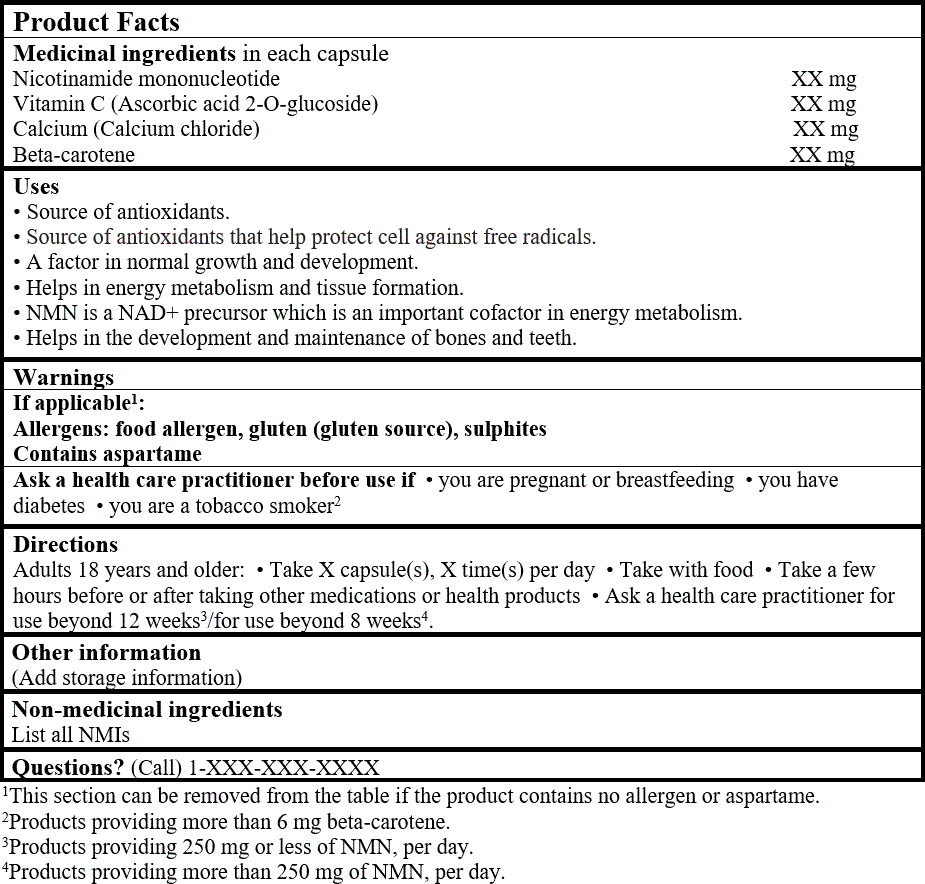
11.0 EXAMPLE OF PRODUCT FACTS:
Consult the Guidance Document, Labelling of Natural Health Products for more details.
12.0 References
- Abdellatif M, Sedej S, Kromer G. NAD+ Metabolism in Cardiac Health, Aging, and Disease. Circulation 2021;144(22):1795-1817.
- Allen LH. Advantages and limitations of iron amino acid chelates as iron fortificants. Nutrition Reviews 2002;60(7 Pt 2):S18-S21.
- Alves-Rodrigues A, Shao A. The science behind lutein. Toxicology Letters 2004;150(1):57-83.
- Anderson RA, Cheng N, Bryden NA, Polansky MM, Cheng N, Chi J, Feug J. Elevated intakes of supplemental chromium improve glucose and insulin variables in individuals with type 2 diabetes. Diabetes 1997;46(11):1786-1791.
- Anderson RA, Roussel AM, Zouari N, Mahjoub S, Matheau JM, Kerkeni A. Potential antioxidant effects of zinc and chromium supplementation in people with type 2 diabetes mellitus. Journal of the American College of Nutrition 2001;20(3):212-218.
- Anton SD, Morrison CD, Cefalu WT, Martin CK, Coulon S, Geiselman P, Hongmei H, White CL, Williamson DA. 2008. Diabetes Technology & Therapeutics 10:405-412.
- ASHP 2005: American Society of Health-System Pharmacists. American Hospital Formulary Service (AHFS) Drug Information. Philadelphia (PA): Lippincott Williams and Wilkins.
- ATBC (Alpha-tocopherol, beta-carotene cancer prevention) study group. The effect of vitamin E and beta carotene on the incidence of lung cancer and other cancers in male smokers. The New England Journal of Medicine 1994;330(15):1029-1035.
- Bairati I, Meyer F, Gélinas M, Fortin A, Nabid A, Brochet F, Mercier JP, Têtu B, Harel F, Mâsse B, et al. A randomized trial of antioxidant vitamins to prevent second primary cancers in head and neck cancer patients. The Journal of National Cancer Institute 2005;97(7):481-488.
- Bairati I, Meyer F, Jobin E, Gélinas M, Fortin A, Nabid A, Brochet F, Têtu B. Antioxidant vitamins supplementation and mortality: a randomized trial in head and neck cancer patients. International Journal of Cancer 2006;119(9):2221-2224.
- Ball P, Woodward D, Beard T. Shoobridge A, Ferrier M. Calcium diglutamate improves taste characteristics of lower-salt soup. European Journal of Clinical Nutrition 2002;56(6):519-523.
- Bardhan PK, Feger A, Kogon M, Muller J, Gillessen D, Beglinger C, Gyr N. Urinary choloyl-PABA excretion in diagnosing small intestinal bacterial overgrowth: evaluation of a new non-invasive method. Digestive Diseases and Sciences 2000;45(3):474-479.
- Barel A, Calomme M, Timchenko A, De Paepe K, Demeester N, Rogiers V, Clarys P, Vanden Berghe D. Effect of oral intake of choline-stabilized orthosilicic acid on skin, nails and hair in women with photodamaged skin. Arch Dermatol Res. 2005 Oct;297(4):147-53. Epub 2005 Oct 26.
- Benevenga NJ. Evidence for alternative pathways of methionine catabolism. Advances in Nutritional Research 1984;6:1-18.
- Bjørke Monsen AL, Ueland PM. Homocysteine and methylmalonic acid in diagnosis and risk assessment from infancy to adolescence. American Journal of Clinical Nutrition 2003;78(1):7-21.
- Blanco-Vaca F, Rotllan N, Canyelles M, Mauricio D, Escolà-Gil JC, Julve J. NAD+-Increasing Strategies to Improve Cardiometabolic Health? Frontiers in Endocrinology 2021;12.
- Blakely S, Herbert A, Collins M, Jenkins M, Mitchell G, Grundel E, O'Neill KR, Khachik F. Lutein interacts with ascorbic acid more frequently than with alpha-tocopherol to alter biomarkers of oxidative stress in female zucker obese rats. The Journal of Nutrition 2003;133(9):2838-2844.
- Booth SL, Golly I, Sacheck JM, Roubenoff R, Dallal GE, Hamada K, Blumberg JB. Effect of vitamin E supplementation on vitamin K status in adults with normal coagulation status. The American Journal of Clinical Nutrition 2004;80(1):143-148.
- Brayfield A, Cadart C, editors. Martindale: The Complete Drug Reference. London (GB): Pharmaceutical Press; 2025. [Accessed 2026 March 5]. Available from: https://www.medicinescomplete.com/#/browse/martindale
- Brown JP, Josse RG. Clinical Practice Guidelines for the Diagnosis and Management of Osteoporosis in Canada. Canadian Medical Association Journal 2002;167(S10):S1-S34.
- Brown L, Rimm EB, Seddon JM, Giovannucci EL, Chasan-Taber L, Spiegelman D, Willett WC, Hankinson SE. A prospective study of carotenoid intake and risk of cataract extraction in US men. The American Journal of Clinical Nutrition 1999;70(4):517-524.
- Bunner SP, McGinnis R. Chromium-induced hypoglycemia. Psychosomatics 1998; 39(3):298-299.
- Campbell WW, Joseph LJO, Anderson RA, Davey SL, Hinton J, Evans WJ. Effects of resistive training and chromium picolinate on body composition and skeletal muscle size in older women. International Journal of Sport Nutrition and Exercise Metabolism 12(2):125-135.
- Campbell WW, Joseph LJO, Davey SL, Cyr-Campbell D, Anderson RA, Evans WJ. 1999. Effects of resistance training and chromium picolinate on body composition and skeletal muscle in older men. Journal of Applied Physiology 2002; 86(1):29-39.
- Cefalu WT, Bell-Farrow AD, Stegner J, Wang ZQ, King T, Morgan T, Terry JG. Effect of chromium picolinate on insulin sensitivity in vivo. The Journal of Trace Elements in Experimental Medicine 1999; 12(2):71-83.
- Cerulli J, Grabe DW, Gauthier I, Malone M, McGoldrick MD. Chromium picolinate toxicity. The Annals of Pharmacotherapy 1998; 32(4):428-431.
- CFIA 2025: Canadian Food Inspection Agency. Food Labelling for industry. Ottawa (ON): Canadian Food Inspection Agency and Health Canada. [Accessed 2026 March 5]. Available from: https://inspection.canada.ca/en/food-labels/labelling/industry
- Chalmers RA, Bain MD, Costello I. Oral cobalamin therapy. Lancet 2000;355(9198):148.
- Christen WG, Liu S, Glynn RJ, Gaziano JM, Buring JE. Dietary carotenoids, vitamins C and E, and risk of cataract in women: a prospective study. Archives of Ophthalmology 2008;126(1):102-109.
- Clegg DO, Reading JC, Mayes MD, Seibold JR, Harris C, Wigley FM, Ward JR, Pisko EJ, Weisman MH, Lee P. Comparison of aminobenzoate potassium and placebo in the treatment of scleroderma. The Journal of Rheumatology 1994;21(1):105-110.
- CNF 2024: Canadian Nutrient File, Food and Nutrition, Health Canada. [Accessed 2026 March 5]. Available from: https://food-nutrition.canada.ca/cnf-fce/index-eng.jsp
- Colombo VE, Gerber F, Bronhofer M, Floersheim GL. Treatment of brittle fingernails and onychoschizia with biotin: scanning electron microscopy. Journal of the American Academy of Dermatology 1990;23:1127-1132.
- Corrigan JJ Jr, Marcus FI. Coagulopathy associated with vitamin E ingestion. The Journal of the American Medical Association 1974;230(9):1300-1301.
- Covarrubias AJ, Perrone R, Grozio A, Verdin E. NAD+ metabolism and its roles in cellular processes during ageing. Nature Reviews Molecular Cell Biology 2021;22:119-141.
- Cupp MJ, Tracy TS. Dietary Supplements: Toxicology and Clinical Pharmacology. Chapter 3 Chromium Picolinate. Totowa (NJ): Humana Press Inc. 2003.
- de Barrio M, Fuentes V, Tornero P, Sanchez I, Zubeldia J, Herrero T. Anaphylaxis to oral iron salts. Desensitization protocol for tolerance induction. Journal of Investigational Allergology and Clinical Immunology 2008;18(4):305-308.
- de Benoist B. Conclusions of a WHO Technical Consultation on folate and vitamin B12 deficiencies. Food and Nutrition Bulletin 2008;29(2 Suppl):S238-244.
- Duffield-Lillico AJ, Slate EH, Reid ME, Turnbull BW, Wilkins PA, Combs GF Jr, Park HK, Gross EG, Graham GF, Stratton MS, Marshall JR, Clark LC; Nutritional Prevention of Cancer Study Group. Selenium supplementation and secondary prevention of non-melanoma skin cancer in a randomized trial. Journal of the National Cancer Institute 2003;95(19):1477-1481.
- Dwyer JH, Navab M, Dwyer KM, Hassan K, Sun P, Shircore A, Hama-Levy S, Hough G, Wang X, Drake T, Merz CN, Fogelman AM. Oxygenated carotenoid lutein and progression of early atherosclerosis: the Los Angeles atherosclerosis study. Circulation 2001;103(24):2922-2927.
- EC 2015: European Commission. EU Register of nutrition and health claims made on foods. [Accessed 2026 March 5]. Available from: http://ec.europa.eu/nuhclaims/
- EC 2009: Commission of the European Communities. COMMISSION REGULATION (EC) No 1170/2009 of 30 November 2009 amending Directive 2002/46/EC of the European Parliament and of Council and Regulation (EC) No 1925/2006 of the European Parliament and of the Council as regards the lists of vitamin and minerals and their forms that can be added to foods, including food supplements. L314/36 Official Journal of the European Union 1.12.2009. [Accessed 2026 March 5]. Available from: http://eur-lex.europa.eu/LexUriServ/LexUriServ.do?uri=OJ:L:2009:314:0036:0042:EN:PDF
- EC 2002: Commission of the European Communities. Directive 2002/46/EC of the European Parliament and of the Council of 10 June 2002 on the approximation of the laws of the Member States relating to food supplements. Official Journal of the European Communities L 183/51. [Accessed 2026 March 5]. Available from: https://eur-lex.europa.eu/LexUriServ/LexUriServ.do?uri=OJ:L:2002:183:0051:0057:EN:PDF
- EC 2000: European Commission. Opinion of the Scientific Committee on Food on the Tolerable Upper Intake level of Vitamin B12. SCF/CS/NUT/UPPLEV/42 Final. Brussels (BE): Health & Consumer Protection Directorate-General, European Commission. [Accessed 2026 March 5]. Available from: https://food.ec.europa.eu/system/files/2020-12/sci-com_scf_out80d_en.pdf
- EFSA 2010a: European Food Safety Authority (EFSA) SCIENTIFIC OPINION Scientific Opinion on the use of ferric sodium EDTA as a source of iron added for nutritional purposes to foods for the general population (including food supplements) and to foods for particular nutritional uses. The EFSA Journal 2010;8(1):1414. [Accessed 2026 March 5]. Available from: http://www.efsa.europa.eu/en/efsajournal/doc/1414.pdf
- EFSA 2010b: EFSA meeting summary report 3: Folic acid: an update on scientific developments. 21-22 January 2009, Uppsala, Sweden. European Food Safety Authority April 2010. [Accessed 2026 March 5]. Available from: https://efsa.onlinelibrary.wiley.com/doi/pdf/10.2903/sp.efsa.2009.EN-2
- EFSA 2009a: European Food Safety Authority (EFSA) SCIENTIFIC OPINION Inositol hexanicotinate (inositol hexaniacinate) as a source of niacin (vitamin B3) added for nutritional purposes in food supplements. The EFSA Journal 2009;949:1-20 [Accessed 2026 March 5]. Available from: https://efsa.onlinelibrary.wiley.com/doi/epdf/10.2903/j.efsa.2009.949
- EFSA 2009b: European Food Safety Authority (EFSA) SCIENTIFIC OPINION Calcium ascorbate, magnesium ascorbate and zinc ascorbate added for nutritional purposes in food supplements. The EFSA Journal 2009;994:1-22. [Accessed 2026 March 5]. Available from: http://www.efsa.europa.eu/sites/default/files/scientific_output/files/main_documents/994.pdf
- EFSA 2009c: European Food Safety Authority (EFSA) SCIENTIFIC OPINION Inability to assess the safety of chromium-enriched yeast added for nutritional purposes as a source of chromium in food supplements and the bioavailability of chromium from this source, based on the supporting dossiers. The EFSA Journal 2009;1083:1-8. [Accessed 2026 March 5]. Available from: http://focalpointbg.com/images/stories/efsa/contents/pdfdocs/ans_ej1083_Chromiumenrichedyeast_st_en.pdf
- EFSA 2009d: European Food Safety Authority (EFSA) SCIENTIFIC OPINION Manganese ascorbate, manganese aspartate, manganese bisglycinate and manganese pidolate as sources of manganese added for nutritional purposes to food supplements. The EFSA Journal 2009;1114:1-23. [Accessed 2026 March 5]. Available from: https://efsa.onlinelibrary.wiley.com/doi/epdf/10.2903/j.efsa.2009.1114
- EFSA 2009e: European Food Safety Authority (EFSA) SCIENTIFIC OPINION Calcium acetate, calcium pyruvate, calcium succinate, magnesium pyruvate magnesium succinate and potassium malate added for nutritional purposes to food supplements. The EFSA Journal 2009;1088:1-25. [Accessed 2026 March 5]. Available from: https://efsa.onlinelibrary.wiley.com/doi/epdf/10.2903/j.efsa.2009.1088
- EFSA 2009f: European Food Safety Authority (EFSA) SCIENTIFIC OPINION Chromium (III) lactate trihydrate as a source of chromium added for nutritional purposes to food supplements. The EFSA Journal 2009;1112:1-20. [Accessed 2026 March 5]. Available from: https://efsa.onlinelibrary.wiley.com/doi/epdf/10.2903/j.efsa.2009.1112
- EFSA 2009g: European Food Safety Authority (EFSA) SCIENTIFIC OPINION Chromium nitrate as a source of chromium added for nutritional purposes to food supplements. The EFSA Journal 2009;1111:1-19. [Accessed 2026 March 5]. Available from: https://efsa.onlinelibrary.wiley.com/doi/epdf/10.2903/j.efsa.2009.1111
- EFSA 2009h: European Food Safety Authority (EFSA) SCIENTIFIC OPINION Iron (II) taurate, magnesium taurate and magnesium acetyl taurate as sources of iron or magnesium added for nutritional purposes in food supplements. The EFSA Journal 2009;947:1- 30. [Accessed 2026 March 5]. Available from: https://efsa.onlinelibrary.wiley.com/doi/epdf/10.2903/j.efsa.2009.947
- EFSA 2009i: European Food Safety Authority (EFSA) SCIENTIFIC OPINION Ferrous phosphate added for nutritional purposes to food supplements. The EFSA Journal 2009;951:1-13. [Accessed 2026 March 5]. Available from: https://efsa.onlinelibrary.wiley.com/doi/epdf/10.2903/j.efsa.2009.951
- EFSA 2009j: European Food Safety Authority (EFSA) SCIENTIFIC OPINION Potassium molybdate as a source of molybdenum added for nutritional purposes to food supplements. The EFSA Journal 2009;1136:1-21. [Accessed 2026 March 5]. Available from: https://efsa.onlinelibrary.wiley.com/doi/epdf/10.2903/j.efsa.2009.1136
- EFSA 2009k: European Food Safety Authority. 2009. The EFSA Journal: Scientific Opinion Chromium picolinate, zinc picolinate and zinc picolinate dehydrate added for nutritional purposes in food supplements. The EFSA Journal 2009; 1113:1-41. [Accessed 2026 March 5]. Available from: http://onlinelibrary.wiley.com/doi/10.2903/j.efsa.2009.1113/epdf
- EFSA 2008a: European Food Safety Authority (EFSA). SCIENTIFIC OPINION Calcium Sulphate for Use as a Source of Calcium in Food Supplements. The EFSA Journal 2008;814:1-9. [Accessed 2026 March 5]. Available from: https://efsa.onlinelibrary.wiley.com/doi/epdf/10.2903/j.efsa.2008.814
- EFSA 2008b: European Food Safety Authority (EFSA) SCIENTIFIC OPINION Mixture of chromium di- and tri-nicotinate as a source of chromium added for nutritional purposes in food supplements and in foods for particular nutritional uses. The EFSA Journal 2008;887:1-24. [Accessed 2026 March 5]. Available from: http://www.efsa.europa.eu/sites/default/files/scientific_output/files/main_documents/887.pdf
- EFSA 2008c: European Food Safety Authority (EFSA) SCIENTIFIC OPINION Selenium-enriched yeast as source for selenium added for nutritional purposes in foods for particular nutritional uses and foods (including food supplements) for the general population. The EFSA Journal 2008;766:1-42. [Accessed 2026 March 5]. Available from: https://efsa.onlinelibrary.wiley.com/doi/epdf/10.2903/j.efsa.2008.766
- EFSA 2008d: European Food Safety Authority (EFSA). SCIENTIFIC OPINION Magnesium aspartate, potassium aspartate, magnesium potassium aspartate, calcium aspartate, zinc aspartate, and copper aspartate as sources for magnesium, potassium, calcium, zinc, and copper added for nutritional purposes to food supplements. The EFSA Journal 2008;883:1-23. [Accessed 2026 March 5]. Available from: https://efsa.onlinelibrary.wiley.com/doi/epdf/10.2903/j.efsa.2008.883
- EFSA 2008e: European Food Safety Authority (EFSA) SCIENTIFIC OPINION Magnesium L-lysinate, calcium L- lysinate, zinc L- lysinate as sources for magnesium, calcium and zinc added for nutritional purposes in food supplements. The EFSA Journal 2008;761:1-11. [Accessed 2026 March 5]. Available from: http://www.efsa.europa.eu/en/efsajournal/doc/761.pdf
- EFSA 2008f: European Food Safety Authority (EFSA) SCIENTIFIC OPINION Calcium L-methionate, magnesium L-methionate and zinc mono-L-methionine sulphate added for nutritional purposes to food supplements. The EFSA Journal 2008;924:1-26. [Accessed 2026 March 5]. Available from: http://www.efsa.europa.eu/sites/default/files/scientific_output/files/main_documents/924.pdf
- EFSA 2008g: European Food Safety Authority (EFSA) SCIENTIFIC OPINION Vanadium citrate, bismaltolato oxo vanadium and bisglycinato oxo vanadium added for nutritional purposes to foods for particular nutritional uses and foods (including food supplements) intended for the general population and vanadyl sulphate, vanadium pentoxide and ammonium monovanadate added for nutritional purposes to food supplements. The EFSA Journal 2008;634:1-15. [Accessed 2026 March 5]. Available from: https://efsa.onlinelibrary.wiley.com/doi/epdf/10.2903/j.efsa.2008.634
- EFSA 2007: European Food Safety Authority (EFSA) Opinion of the Scientific Panel on Food Additives, Flavourings, Processing Aids and Materials in Contact with Food on a request from the Commission related to Calcium, iron, magnesium, potassium and zinc L-pidolate as sources for calcium, iron, magnesium, potassium and zinc added for nutritional purposes to food supplements and to foods intended for particular nutritional uses. The EFSA Journal 2007:495-503:1-10. [Accessed 2026 March 5]. Available from: http://www.efsa.europa.eu/sites/default/files/scientific_output/files/main_documents/495.pdf
- EFSA 2006: European Food Safety Authority (EFSA). Opinion of the Scientific Panel on Food Additives, Flavourings, Processing Aids and Materials in Contact with Food on a request from the Commission related to Calcium, Magnesium and Zinc Malate added for nutritional purposes to food supplements as sources for Calcium, Magnesium and Zinc and to Calcium Malate added for nutritional purposes to foods for particular nutritional uses and foods intended for the general population as source for Calcium. The EFSA Journal 2006;391a,b,c,d:1-6. [Accessed 2026 March 5]. Available from: http://www.efsa.europa.eu/de/scdocs/doc/391a.pdf
- EFSA 2004: European Food Safety Authority (EFSA). Statement of the Scientific Panel on Food Additives, Flavourings, Processing Aids and Materials in Contact with Food on a request from the Commission related to Boric Acid and Sodium borate as nutrient sources of boron. [Accessed 2026 March 5]. Available from: http://www.efsa.europa.eu/en/scdocs/doc/1044.pdf
- EMA/CHMP 2006: European Medicines Agency: Pre-authorization Evaluation of Medicines for Human Use. Committee for Medicinal Products for Human Use. Reflection Paper: Formulations of choice for the paediatric population. Adopted September 2006. EMA/CHMP/PEG/194810/2005. [Accessed 2026 March 5]. Available from: https://www.ema.europa.eu/en/documents/scientific-guideline/reflection-paper-formulations-choice-paediatric-population_en.pdf
- Erdman JW Jr, Ford NA, Lindshield BL. Are the health attributes of lycopene related to its antioxidant function? Archives of Biochemistry and Biophysics 2009;483(2):229-235.
- Evans GW, Pouchnik DJ. Composition and biological activity of chromium-pyridine carboxylate complexes. Journal of Inorganic Biochemistry 1993;49(3):177-187.
- FAO 2018: Food and Agriculture Organization of the United Nations. Joint FAO/WHO Expert Committee on Food Additives. 2018. Lutein from Tagetes erecta. [Accessed 2026 March 5]. Available from: https://openknowledge.fao.org/server/api/core/bitstreams/aaf17e49-2bd9-4308-9d81-e110549b1d8c/content
- FAO 2012: Food and Agriculture Organization of the United Nations: Calcium L-5-Methyltetrahydrofolate. [Accessed 2026 March 5]. Available from: http://www.fao.org/fileadmin/user_upload/jecfa_additives/docs/Monograph1/Additive-090.pdf
- FAO/WHO 1967: Food and Agricultural Organization of the United Nations / World Health Organization. 1967. Requirements of vitamin A, thiamine, riboflavine and niacin: report of a joint FAO/WHO Expert Group. Geneva: WHO Technical Report Series 362.
- FCC 2026: Food Chemicals Codex. 15th edition. Rockville (MD): The United States Pharmacopeial Convention; 2026.
- FDA 2008: United States Food and Drug Administration. Calcium and Osteoporosis, and Calcium, Vitamin D, and Osteoporosis. Federal Register, Volume 73, Number 189, September 29, 2008, Final Rules. Rockville (MD): Department of Health and Human Services, U.S. Food and Drug Administration. [Accessed 2026 March 5].Available from: https://www.gpo.gov/fdsys/pkg/FR-2008-09-29/pdf/E8-22730.pdf
- Fletcher AE, Bentham GC, Agnew M, Young IS, Augood C, Chakravarthy U, de Jong PT, Rahu M, Seland J, Soubrane G, et al. Sunlight exposure, antioxidants, and age-related macular degeneration. Archives of Ophthalmology 2008;126(10):1396-1403.
- Franco V, Polanczyk CA, Clausell N, Rohde LE. Role of dietary vitamin K intake in chronic oral anticoagulation: prospective evidence from observational and randomized protocols. The American Journal of Medicine 2004;166(10):651-656.
- FSANZ 2008: Food Standards Australia-New Zealand: Final Assessment Report Application A566 L-5-methyltetrahydrofolate, calcium as a permitted vitamin form of folate. 4 June 2008. [Accessed 2026 March 5]. Available from: https://www.foodstandards.gov.au/code/applications/documents/A566%20L-Methylfolate%20FAR%20FINAL.pdf
- Fujita T, Ohue T, Fujii Y, Miyauchi A, Takagi Y. Heated oyster shell-seaweed calcium (AAA Ca) on osteoporosis. Calcified Tissue International 1996;58(4):226-230.
- Gann PH, Ma J, Giovannucci E, Willett W, Sacks FM, Hennekens CH, Stampfer MJ. Lower prostate cancer risk in men with elevated plasma lycopene levels: results of a prospective analysis. Cancer Research 1999;59(6):1225-1230.
- Giacoia GP, Taylor-Zapata P, Mattison D. Eunice Kennedy Shriver National Institute of Child Health and Human Development Pediatric Formulation Initiative: selected reports from working groups. Clinical Therapeutics 2008;30(11):2097-2101.
- Giovannucci E, Ascherio A, Rimm EB, Stampfer MJ, Colditz GA, Willett WC. Intake of carotenoids and retinol in relation to risk of prostate cancer. Journal of the National Cancer Institute 1995;87(23):1767-1776.
- Giovannucci E, Rimm EB, Liu Y, Stampfer MJ, Willett WC. A prospective study of tomato products, lycopene, and prostate cancer risk. Journal of the National Cancer Institute 2002;94(5):391-398.
- Grant KE, Chandler RM, Castle AL, Ivy JL. Chromium and exercise training: effect on obese women. Medicine and Science in Sports and Exercise 1997;28(8):992-998.
- Groff J, Gropper S. Advanced Nutrition and Human Metabolism, 3rd edition. Belmont (CA): Wadsworth/Thomson Learning 2000.
- Gruenwald J, Bendler T, Jaenicke C, editors. PDR for Herbal Medicines, 3rd edition. Montvale (NJ): Thomson PDR 2004.
- Guiry MD, Guiry GM. 2009. AlgaeBase [database on the Internet].Galway (IRE): World-wide electronic publication, National University of Ireland [Accessed 2026 March 5]. Available from: http://www.algaebase.org
- Hansten PD, Horn JR, editors. Drug Interactions Analysis and Management. Vancouver (WA): Applied Therapeutics Inc 1997.
- HC 2026: Health Canada. Summary Safety Review - Vitamin B6 Health Products - Assessing the Potential Risk of Peripheral Neuropathy. [Accessed 2026 March 11]. Available from: https://dhpp.hpfb-dgpsa.ca/review-documents/resource/SSR1773147434487
- HC 2021: Health Canada. Prescription Drug List. [Accessed 2026 March 5]. Available from: http://www.hc-sc.gc.ca/dhp-mps/prodpharma/pdl-ord/pdl_list_fin_ord-eng.php
- HC 2015: Health Canada. Quality of Natural Health Products Guide. Ottawa (ON): Natural and Non-Prescription Health Products Directorate, Health Canada. [Accessed 2026 March 5]. Available from: http://www.hc-sc.gc.ca/dhp-mps/prodnatur/legislation/docs/eq-paq-eng.php
- HC 2009a: Health Canada. Prenatal Nutrition Guidelines for Health Professionals - Folate Contributes to a Healthy Pregnancy. Ottawa (ON): Health Canada. [Accessed 2026 March 5]. Available from: http://www.hc-sc.gc.ca/fn-an/pubs/nutrition/folate-eng.php
- HC 2009b: Health Canada. Prenatal Nutrition Guidelines for Health Professionals - Background on Canada's Food Guide. Ottawa (ON): Health Canada. [Accessed 2026 March 5]. Available from: http://www.hc-sc.gc.ca/fn-an/pubs/nutrition/guide-prenatal-eng.php
- HC 2006a: Health Canada. It's your health: The safety of Vitamin E supplements. [Accessed 2026 March 5]. Available from: https://www.canada.ca/content/dam/hc-sc/migration/hc-sc/hl-vs/alt_formats/pdf/iyh-vsv/food-aliment/vitam-eng.pdf
- HC 2006b: Health Canada: Dietary Reference Intakes Definitions. [Accessed 2026 March 5]. Available from: https://publications.gc.ca/collections/Collection/H44-87-2005E.pdf
- HC 1990: Health Canada. 1990. Nutrition Recommendations. The Report of the Scientific Review Committee. Ottawa: Minister of Supply and Services.
- Henderson RW. Glucosamine, chondroitin and manganese composition for the protection and repair of connective tissue. United States patent 5,364,845. November 15, 1994.
- Hendler SS, Rorvik D, editors. PDR Nutritional Supplements, 1st edition. Montvale (NJ): Thomson PDR; 2001.
- Huang H. A Multicentre, Randomised, Double Blind, Parallel Design, Placebo Controlled Study to Evaluate the Efficacy and Safety of Uthever (NMN Supplement), an Orally Administered Supplementation in Middle Aged and Older Adults. Front Aging 2022;3:851698.
- IOM 2011: Institute of Medicine. Ross AC, Taylor CL, Yaktine AL, Del Valle HB, editors. Dietary Reference Intakes for Calcium and Vitamin D. Washington (DC): National Academies Press; 2011.
- IOM 2006: Institute of Medicine. Otten JJ, Pitzi Hellwig J, Meyers LD, editors. Institute of Medicine Dietary Reference Intakes: The Essential Guide to Nutrient Requirements. Washington (DC): National Academies Press; 2006.
- IOM 2005a: Institute of Medicine. Panel on Macronutrients, Panel on the Definition of Dietary Fiber, Subcommittee on Upper Reference Levels of Nutrients, Subcommittee on Interpretation and Uses of Dietary Reference Intakes, and the Standing Committee on the Scientific Evaluation of Dietary Reference Intakes, Food and Nutrition Board, Institute of Medicine. Dietary Reference Intakes for Energy, Carbohydrate, Fiber, Fat, Fatty Acids, Cholesterol, Protein, and Amino Acids. Washington (DC): National Academies Press; 2005.
- IOM 2005b: Institute of Medicine. Panel on Dietary Reference Intakes for Electrolytes and Water, and the Standing Committee on the Scientific Evaluation of Dietary Reference Intakes, Food and Nutrition Board, Institute of Medicine. Dietary Reference Intakes for Water, Potassium, Sodium, Chloride, and Sulfate. Washington (DC): National Academies Press; 2005.
- IOM 2002: Dietary Reference Intakes for Energy, Carbohydrate, Fiber, Fat, Fatty Acids, Cholesterol, Protein, and Amino Acids. Food and Nutrition Board, Institute of Medicine. Washington (DC): National Academy Press; 2002.
- IOM 2001: Institute of Medicine. Panel on Micronutrients, Subcommittees on Upper Reference Levels of Nutrients and Interpretation and Uses of Dietary Reference Intakes, and the Standing Committee on the Scientific Evaluation of Dietary Reference Intakes, Food and Nutrition Board, Institute of Medicine. Dietary Reference Intakes for Vitamin A, Vitamin K, Arsenic, Boron, Chromium, Copper, Iodine, Iron, Manganese, Molybdenum, Nickel, Silicon, Vanadium, and Zinc. Washington (DC): National Academy Press; 2001.
- IOM 2000: Institute of Medicine. Panel on Dietary Antioxidants and Related Compounds, Subcommittees on Upper Reference Levels of Nutrients and Interpretation and Uses of Dietary Reference Intakes, and the Standing Committee on the Scientific Evaluation of Dietary Reference Intakes, Food and Nutrition Board, Institute of Medicine. Dietary Reference Intakes for Vitamin C, Vitamin E, Selenium and Carotenoids. Washington (DC): National Academy Press; 2000.
- IOM 1998: Institute of Medicine. Panel on Folate, other B Vitamins, and Choline and Subcommittee on Upper Reference Levels of Nutrients, and the Standing Committee on the Scientific Evaluation of Dietary Reference Intakes, Food and Nutrition Board, Institute of Medicine. Dietary Reference Intakes for Thiamin, Riboflavin, Niacin, Vitamin B6, Folate, Vitamin B12, Pantothenic Acid, Biotin and Choline. Washington (DC): National Academy Press; 1998.
- IOM 1997: Institute of Medicine. Standing Committee on the Scientific Evaluation of Dietary Reference Intakes, Food and Nutrition Board, Institute of Medicine. Dietary Reference Intakes for Calcium, Phosphorous, Magnesium, Vitamin D, and Fluoride. Washington (DC): National Academy Press; 1997.
- IPCS 1998: International Program on Chemical Safety. International Agency for Research on Cancer (IARC) - Summaries & Evaluations: Iron-carbohydrate Complexes. Volume 2 (1973) p. 161. Geneva (CHE): World Health Organization on behalf of the IPCS (World Health Organization, United Nations Environment Programme, International Labour Organisation). [Accessed 2026 March 5]. Available from: http://www.inchem.org/documents/iarc/vol02/iron.html
- Ishitani K, Itakura E, Goto S, Esashi T. Calcium absorption from the ingestion of coral-derived calcium by humans. Journal of Nutritional Science and Vitaminology (Tokyo) 1999;45(5):509-517.
- ISMP 2021a: Institute for Safe Medication Practices Canada. "Confusing Calcium Product Labels Lead to Hospitalizations." ISMP Canada Safety Bulletin, vol. 21, no. 1, January 26, 2021, https://www.ismp-canada.org/download/safetyBulletins/2021/ISMPCSB2021-i1-Calcium.pdf
- ISMP 2021b: Institute for Safe Medication Practices Canada. "Confusing Labels for Zinc Products." ISMP Canada Safety Bulletin, vol. 21, no. 11, December 14, 2021, https://www.ismp-canada.org/download/safetyBulletins/2021/ISMPCSB2021-i11-HYDROmorphone-label.pdf#page=4
- ISMP 2021c: Institute for Safe Medication Practices Canada. "How Much Iron Is in Here?" SafeMedicationUse.ca Newsletter, vol. 11, no. 2, February 5, 2020, https://safemedicationuse.ca/newsletter/downloads/202002NewsletterV11N2-Iron.pdf
- Jackson RD, LaCroix AZ, Gass M, Wallace RB, Robbins J, Lewis CE, Bassford T, Beresford SAA, Black HR, Blanchette P, et al. Calcium plus Vitamin D Supplementation and the Risk of Fractures. The New England Journal of Medicine 2006;354(7):669-683.
- Jain SK, Kahlon G, Morehead L, Dhawan R, Lieblong B, Stapleton T, Caldito G, Hoeldtke R, Levine SN, Bass PF. Effect of chromium dinicocysteinate supplementation on circulating levels of insulin, TNF-α, oxidative stress and insulin resistance in type 2 diabetic subjects: randomized, double blind, placebo-controlled study. Molecular Nutrition & Food Research 2012;56(8):1333-1341.
- JC 2026a: Department of Justice Canada. Food and Drug Regulations. Ottawa (ON): Department of Justice Canada. [Accessed 2026 March 5]. Available from: http://laws-lois.justice.gc.ca/eng/regulations/C.R.C.%2C_c._870/
- JC 2026b: Department of Justice Canada. Natural Health Products Regulations. Ottawa (ON): Department of Justice Canada. [Accessed 2026 March 5]. Available from: http://laws-lois.justice.gc.ca/eng/regulations/SOR-2003-196/index.html
- Johnson EJ, Chung HY, Caldarella SM, Snodderly DM. The influence of supplemental lutein and docosahexaenoic acid on serum, lipoproteins, and macular pigmentation. The American Journal of Clinical Nutrition 2008;87(5):1521-1529.
- Katayoshi T, Uehata S, Nakashima N, Nakajo T, Kitajima N, Kageyama M, Tsuji-Naito K. Nicotinamide adenine dinucleotide metabolism and arterial stiffness after long-term nicotinamide mononucleotide supplementation: a randomized, double-blind, placebo-controlled trial. Sci Rep. 2023;13(1):2786.
- Kato I, Vogelman JH, Dilman V, Karkoszka J, Frenkel K, Durr NP, Orentreich N, Toniolo P. Effect of supplementation with chromium picolinate on antibody titers to 5-hydroxymethyl uracil. European Journal of Epidemiology 1998;14(6):621-626.
- Klimis-Tavantzis DJ, editor. Manganese in Health and Disease. Boca Raton (FL): CRC Press; 1994.
- Krieger D, Krieger S, Jansen O, Gass P, Theilmann L, Lichtnecker H. Manganese and chronic hepatic encephalopathy. Lancet 1995;246(8970):270-274.
- Kristal AR, Arnold KB, Schenk JM, Neuhouser ML, Goodman P, Penson DF, Thompson IM. Dietary patterns, supplement use, and the risk of symptomatic benign prostatic hyperplasia: results from the prostate cancer prevention trial. The American Journal Epidemiology 2008;167(8):925-934.
- Kucuk O, Sarkar FH, Djuric Z, Sakr W, Pollak MN, Khachik F, Banerjee M, Bertram JS, Wood DP Jr. Effects of lycopene supplementation in patients with localized prostate cancer. Experimental Biology and Medicine 2002;227(10):881-885.
- Kucuk O, Sarkar FH, Sakr W, Djuric Z, Pollak MN, Khachik F, Li YW, Banerjee M, Grignon D, Bertram JS, Crissman JD, Pontes EJ, Wood DP Jr. Phase II randomized clinical trial of lycopene supplementation before radical prostatectomy. Cancer Epidemiology, Biomarkers & Prevention 2001;10(8):861-868.
- Lee NA, Reasner CA. Beneficial effect of chromium supplementation on serum triglyceride levels in NIDDM. Diabetes Care 1994;17(12):1449-1452.
- Liao B, Zhao Y, Wang D, Zhang X, Hao X, Hu M. Nicotinamide mononucleotide supplementation enhances aerobic capacity in amateur runners: a randomized, double-blind study. Journal of the International Society of Sports Nutrition 2021;18(1):1-9.
- Lonn E, Bosch J, Yusuf S, Sheridan P, Pogue J, Arnold JM, Ross C, Arnold A, Sleight P, Probstfield J, Dagenais GR; HOPE and HOPE-TOO Trial Investigators. Effects of long-term vitamin E supplementation on cardiovascular events and cancer: a randomized controlled trial. The Journal of the American Medical Association 2005;293(11):1338-1347.
- MacKay D, Miller AL. Nutritional support for wound healing. Alternative Medicine Review 2003;8(4):359-377.
- Maren, Thomas. Relations between structure and biological activity of sulfonamides. Ann. Rev. Pharmacol. Toxicology 1976;16:309-327.
- Matos HR, Capellozzi VL, Gomes QF, Mascio PD, Medeiros MH. Lycopene inhibits DNA damage and liver necrosis in rats treated with ferric nitrolotriacetate. Archives of Biochemistry and Biophysics 2001;396(2):171-177.
- McCarty MF. Over the counter chromium and renal failure [letter]. Annals of Internal Medicine 1997;127:654-655.
- Meisel P, Schwahn C, Luedemann J, John U, Kroemer HK, Kocher T. Magnesium deficiency is associated with periodontal disease. Journal of Dental Research 2005;84(10):937-941.
- Meyer F, Bairati I, Fortin A, Gélinas M, Nabid A, Brochet F, Têtu B. Interaction between antioxidant vitamin supplementation and cigarette smoking during radiation therapy in relation to long-term effects on recurrence and mortality: A randomized trial among head and neck cancer patients. International Journal of Cancer 2008;122(7):1679-1683.
- Miranda M, Muriach M, Roma J, Bosch-Morell F, Genovés JM, Barcia J, Araiz J, Díaz-Llospis M, Romero FJ. Oxidative stress in a model of experimental diabetic retinopathy: the utility of peroxynitrite scavengers. Archivos de la Sociedad Española de Oftalmología 2006;81(1):27-32.
- Moeller SM, Voland R, Tinker L, Blodi BA, Klein ML, Gehrs KM, Johnson EJ, Snodderly DM, Wallace RB, Chappell RJ, Parekh N, Ritenbaugh C, Mares JA; CAREDS Study Group; Women's Health Initiative. Associations between age-related nuclear cataract and lutein and zeaxanthin in the diet and serum in the Carotenoids in the Age-Related Eye Disease Study, an Ancillary Study of the Women's Health Initiative. Archives of Ophthalmology 2008;126(3):354-364.
- Mohanty NK, Saxena S, Singh UP, Goyal NK, Arora RP. Lycopene as a chemopreventive agent in the treatment of high-grade prostate intraepithelial neoplasia. Urologic Oncology 2005;23(6):383-385.
- Murray MT. Encyclopedia of Nutritional Supplements: The Essential Guide for Improving your Health Naturally. Rocklin (CA): Prima Health; 1996.
- NAMS (The North American Menopause Society). 2006. Position Statement - The role of calcium in peri- and postmenopausal women: 2006 position statement of The North American Menopause Society. The Journal of the North American Menopause Society 13(6):862-877.
- NHPID 2026: Natural Health Products Ingredients Database. Natural and Non-Prescription Health Products Directorate. [Accessed 2026 March 5]. Available from: http://webprod.hc-sc.gc.ca/nhpid-bdipsn/search-rechercheReq.do
- NIH 2026: National Institutes of Health. PubChem. Bethesda (MD): National Library of Medicine, US Department of Health & Human Services. [Accessed 2026 March 05]. Available from: https://pubchem.ncbi.nlm.nih.gov/
- NIH 2022: National Institutes of Health. Fact sheet for health professionals – Folate. [Accessed 2026 March 5]. Available from: https://ods.od.nih.gov/factsheets/Folate-HealthProfessional/
- NIH 2015: National Institutes of Health. Dietary Supplement Label Database. [Accessed 2026 March 5]. Available from: http://www.dsld.nlm.nih.gov/dsld/index.jsp
- NIH 2011: National Institutes of Health. Dietary Supplement Fact Sheet: Vitamin B12. [Accessed 2026 March 5]. Available from: http://ods.od.nih.gov/pdf/factsheets/VitaminB12-HealthProfessional.pdf
- NIH 2001: National Institute of Health. Osteoporosis Prevention, Diagnosis, and Therapy. NIH Consensus Development Panel on Osteoporosis Prevention, Diagnosis, and Therapy. JAMA 2001;285(6):785-795.
- Nowak MG, Szulc-Musioł B, Ryszka F. Pharmacokinetics of calcium from calcium supplements in healthy volunteers. Pakistan Journal of Pharmaceutical Sciences 2008;21(2):109-112.
- Okabe K, Yaku K, Uchida Y, Fukamizu Y, Sato T, Sakurai T, Tobe K, Nakagawa T. Oral Administration of Nicotinamide Mononucleotide Is Safe and Efficiently Increases Blood Nicotinamide Adenine Dinucleotide Levels in Healthy Subjects. Front Nutr. 2022;9:868640.
- Olmedilla B, Granado F, Blanco I, Vaquero M. Lutein, but not alpha-tocopherol, supplementation improves visual function in patients with age-related cataracts: a 2-y double-blind, placebo-controlled pilot study. Nutrition 2003;19(1):21-24.
- Omenn GS, Goodman GE, Thornquist MD, Balmes J, Cullen MR, Glass A, Keogh JP, Meyskens FL, Valanis B, Williams JH, Barnhart S, Hammar S. Effects of a combination of beta carotene and vitamin A on lung cancer and cardiovascular disease. New England Journal of Medicine 1996;334(18):1150-1155.
- Pasman WJ, Westerterp-Plantenga MS, Saris WHM. The effectiveness of long-term supplementation of carbohydrate, chromium, fibre and caffeine on weight maintenance. International Journal of Obesity and Related Metabolic Disorders 1997;21(12):1143-1151.
- Patrick L. Comparative absorption of calcium sources and calcium citrate malate for the prevention of osteoporosis. Alternative Medicine Review 1999;4(2):74-85.
- Picciotto NE, Gano LB, Johnson LC, Martens CR, Sindler AL, Mills KF, Imai S-I, Seals DR. Nicotinamide mononucleotide supplementation reverses vascular dysfunction and oxidative stress with aging in mice. Aging cell. 2016;15(3):522-530.
- Porrini M, Riso P, Brusamolino A, Berti C, Guarnieri S, Visioli F. Daily intake of formulated tomato drink affects carotenoid plasma and lymphocyte concentrations and improves cellular antioxidant protection. British Journal of Nutrition 2005;93(1):93-99.
- Richards JD. 2008. Methods for determining the metal bioavailability of metal sources. United States Patent Application 20080090297. [Accessed 2026 March 5]. Available from: http://www.freepatentsonline.com/y2008/0090297.html
- Richer S, Stiles W, Statkute L, Pulido J, Frankowski J, Rudy D, Pei K, Tsipursky M, Nyland J. Double-masked, placebo-controlled, randomized trial of lutein and antioxidant supplementation in the intervention of atrophic age-related macular degeneration: the Veterans LAST study (Lutein Antioxidant Supplementation Trial). Optometry 2004;75(4):216-230.
- RSC 2025: Royal Society of Chemistry: The Merck Index Online; 2025. [Accessed 2026 March 5]. Available from: https://merckindex.rsc.org/
- Sakai F, Yoshida S, Endo S, Tomita H. Double-blind, Placebo-controlled Trial of Zinc Picolinate for Taste Disorders. Informa healthcare 2002;122:129-133.
- Schwartz JR, Marsh RG, Draelos ZD. Zinc and skin health: overview of physiology and pharmacology. Dermatologic Surgery 2005;31(7 Pt 2):837-847.
- Schwarz S, Obermüller-Jevic UC, Hellmis E, Koch W, Jacobi G, Biesalski HK. Lycopene inhibits disease progression in patients with benign prostate hyperplasia. The Journal of Nutrition 2008;138(1):49-53.
- Seyoum GG, Persaud TV. Can methionine and zinc prevent the embryopathic effects of alcohol? Medical Hypotheses 1991;34(2):153-156.
- Shao A, Hathcock JN. Risk assessment for the carotenoids lutein and lycopene. Regulatory Toxicology and Pharmacology 2006;45(3):289-298.
- Shils ME, Olson JA, Shike M, Ross AC, editors. Modern Nutrition in Health and Disease, 10th edition. Philadelphia (PA): Lippincott Williams and Wilkins; 2006.
- Silaste ML, Alfthan G, Agro A, Kesäniemi YA, Hörkkö S. Tomato juice decreases LDL cholesterol levels and increases LDL resistance to oxidation. British Journal of Nutrition 2007;98(6):1251-1258.
- Summers WK, Martin RL, Cunningham M, DeBoynton VL, Marsh GM. Complex antioxidant blend improves memory in community-dwelling seniors. Journal of Alzheimer's Disease 2010:19(2):429-439.
- Tang BMP, Eslick GD, Nowson C, Smith C, Bensoussan A. Use of calcium or calcium in combination with vitamin D supplementation to prevent fracture and bone loss in people aged 50 years and older: a meta-analysis. Lancet 2007;370(9588):657-666.
- TGA 2007: Therapeutic Goods Administration. Australian Government. Department of Health. Substances that may be used in Listed medicines in Australia. [Accessed 2026 March 5]. Available from: https://www.tga.gov.au/sites/default/files/cm-listed-substances_0.pdf
- Tisdale JE, Rudis MI, Padhi ID, Svensson CK, Webb CR, Borzak S, Ware JA, Krepostman A, Zarowitz BJ. Inhibition of N-acetylation of procainamide and renal clearance of N-acetylprocainamide by para-aminobenzoic acid in humans. The Journal of Clinical Pharmacology 1995;35(9):902-910.
- Touvier M, Kess E, Clavel-Chapelon F, Boutron-Rualt MC. Dual association of beta-carotene with risk of tobacco-related cancers in a cohort of French women. Journal of the National Cancer Institute 2005;97(18):1338-1344.
- Tsuboi M, Shiraki M, Hamada M, Shimodaira H. Effects of phosphorus-containing calcium preparation (bone meal powder) and calcium carbonate on serum calcium and phosphorus in young and old healthy volunteers: a double-blinded crossover study. Journal of Bone and Mineral Metabolism 2000;18(6):321-327.
- US FDA 2019: Converting Units of Measure for Folate, Niacin, and Vitamins A, D, and E on the Nutrition and Supplement Facts Labels: Guidance for Industry. [Accessed 2026 March 5]. Available from: https://www.fda.gov/media/129863/download
- USP-NF 2024: United States Pharmacopeia and the National Formulary. Rockville (MD): The United States Pharmacopeial Convention; 2024.
- Van Der Kuy PH, Merkus FW, Lohman JJ, Ter Berg JW, Hooymans PM. Hydroxocobalamin, a nitric oxide scavenger, in the prophylaxis of migraine: an open, pilot study. Cephalalgia 2002;22(7):513-519.
- Walsdorf NB, Alexandrides G. Calcium glutarate supplement and phosphorous binder. United States patent 6,887,897. May 03 2005.
- Wani S, Weskamp C, Marple J, Spry L. Acute tubular necrosis associated with chromium picolinate-containing dietary supplement. The Annals of Pharmacotherapy 2006;40(3):563-566.
- Ward NC, Wu JH, Clarke MW, Puddey IB, Burke V, Croft KD, Hodgson JM. The effect of vitamin E on blood pressure in individuals with type 2 diabetes: a randomized, double-blind, placebo-controlled trial. Journal of Hypertension 2007;25(1):227-234.
- Wasser WG, Feldman NS, D'Agati VD. Chronic renal failure after ingestion of over-the-counter chromium picolinate. Annals of Internal Medicine 1997;126(5):410.
- Weidner W, Hauck EW, Schnitker J; Peyronie's Disease Study Group of Andrological Group of German Urologists Potassium paraaminobenzoate (POTABA) in the treatment of Peyronie's disease: a prospective, placebo-controlled, randomized study. European Urology 2005;47(4):530-535; discussion 535-536.
- WHO 2005: World Health Organization. Evaluation of certain food additives: sixty-third report of the Joint FAO/WHO Expert Committee on Food Additives. (WHO technical report series; 928). Geneva (CH): World Health Organization. [Accessed 2026 March 5]. Available from: https://www.who.int/publications/i/item/9241209283
- Wickett RR, Kossmann E, Barel A, Demeester N, Clarys P, Vanden Berghe D and Calomme M. Effect of oral intake of choline-stabilized orthosilicic acid on hair tensile strength and morphology in women with fine hair. Archives for Dermatological Research 2007;299(10):499-505.
- Winterbone MS, Sampson MJ, Saha S, Hughes JC, Hughes DA. Pro-oxidant effect of alpha-tocopherol in patients with type 2 diabetes after an oral glucose tolerance test-a randomised controlled trial. Cardiovascular Diabetology 2007;6:8.
- Yi L, Maier AB, Tao R, Lin Z, Vaidya A, Pendse S, Thasma S, Andhalkar N, Avhad G, Kumbhar V. The efficacy and safety of β-nicotinamide mononucleotide (NMN) supplementation in healthy middle-aged adults: a randomized, multicenter, double-blind, placebo-controlled, parallel-group, dose-dependent clinical trial. Geroscience 2023;45(1):29-43.
- Yoshino M, Yoshino J, Kayser BD, Patti GJ, Franczyk MP, Mills KF, ... Klein S. Nicotinamide mononucleotide increases muscle insulin sensitivity in prediabetic women. Science 2021;372(6547);1224-1229.
- Zeisel SH. Choline: Critical role during fetal development and dietary requirements in adults. Annual Review of Nutrition 2006;26:229-250.
- Zeitlin HC, Sheppard K, Baum JD, Bolton FG, Hall CA. Homozygous transcobalamin II deficiency maintained on oral hydroxocobalamin. Blood 1985;66(5):1022-1027.
13.0 Appendices
Appendix I
Source ingredients with two active components
A source ingredient may provide more than one active component in this monograph. For example, calcium ascorbate provides both calcium and ascorbic acid (vitamin C). The PLA form and label must declare all active components of a source ingredient as medicinal ingredients and provide their quantity per dosage unit if the total daily dose of that active component (i.e. vitamin or mineral) exceeds the monograph's minimum dosage value.
For certain source ingredients that provide more than one active component, when one of the components is used within its acceptable dosage range it could result in the other component exceeding its acceptable dosage range.
For example, a product formulated to provide the maximum dosage value of calcium for adults (i.e. 1500 mg) from the source ingredient, calcium ascorbate, would provide 13.2 g of vitamin C. This exceeds vitamin C's adult maximum dosage value of 2000 mg; and therefore, such a product would not be supported for safety. Based on the calculation described below, the maximum dosage value of calcium from calcium ascorbate would be 228 mg as this dose provides 2000 mg of vitamin C.
The following table outlines dose restriction information for calcium ascorbate. It provides the maximum dosage values for calcium and its corresponding source ingredient. Below this table is a sample calculation which demonstrates how these values were derived.
| Subpopulations | Maximum dosage value of calcium from calcium ascorbate (mg Ca/day) (mg/day calcium ascorbate) | |
|---|---|---|
| Infants | 0-12 months | – |
| Children | 1-3 years | 46 (443) |
| 4-8 years | 74 (720) | |
| Adolescents | 9-13 years | 137 (1,330) |
| 14-17 years | 205 (1,995) | |
| Adults | 18 years | 205 (1,995) |
| 19 years and older | 228 (2,216) | |
Sample Calculation
Question: What is the maximum quantity of calcium (maximum dosage value for adults ≥19 y) from the source ingredient calcium ascorbate that can be used in a formulation?
Solution: In order to make this determination, the quantity of calcium from calcium ascorbate that provides the maximum dosage value for adults ≥19 y of ascorbic acid (vitamin C) must be calculated.
Source ingredient: calcium ascorbate (calcium di-ascorbate): Ca (C6H7O6)2
There are 2 molecules of ascorbate (C6H7O6) for every one of calcium (Ca)
Molecular weight = MW
Maximum dosage value (for adults, ≥19 y) = M
Number of molecules = N
Calcium = Ca
PMCa = 40,1 g/mol
MCa= ?
Ascorbic acid = Aa
PMAa = 176,1 g/mol
MAa = 2 g
[MCa]/[PMCa x n] = [MAa]/[PMAa x n]
[MCa]/[40,1 g/mol x 1] = [2 g]/[176,1 g/mol x 2]
MCa = [g x 40.1 g/mol x 1]/[176,1 g/mol x 2]
MCa = [80,2 g2/mol]/[352,2 g/mol]
MCa = 0,228 g ou 228 mg
Appendix II
Guidelines for use or purpose statements
It is mandatory for all natural health products to indicate at least one use or purpose statement.
Specific use or purpose statements:
Ingredient specific use or purpose statements can be used for any or all of the medicinal ingredients contained in a multi-ingredient product, as applicable (see Section 4.2 - Specific use or purpose statements).
A specific use or purpose statement must be made for products providing magnesium (> 350 mg per day), niacin (> 35 mg per day), iron (> 35 mg per day), or zinc (> 40 mg per day).
Inclusion of medicinal ingredient names in a specific use or purpose statement is optional; for example, the specific use or purpose statement can be applied to the whole product. However, if medicinal ingredient names are specified in a use or purpose statement, the statement must be valid for all medicinal ingredients specified.
Appendix III
Definitions and dosage value derivations
1) Definitions:
Adequate intake (AI): The recommended average daily intake level based on observed or experimentally determined approximations or estimates of nutrient intake by a group (or groups) of apparently healthy people that are assumed to be adequate. An AI is used when a RDA cannot be determined (IOM 2006).
Maximum dosage value: The highest medicinal ingredient quantity which a product can supply in a daily dose to support its safe use.
Minimum dosage value: The lowest medicinal ingredient quantity which a product can supply in a daily dose to support recommended claims.
Recommended dietary allowance (RDA): The average daily dietary nutrient intake level sufficient to meet the nutrient requirements of nearly all (97-98%) healthy individuals in a particular life stage and gender group (IOM 2006).
Tolerable upper intake level (UL): The highest average daily nutrient intake level that is likely to pose no risk of adverse health effects to almost all individuals in the general population. As intake increases above the UL, the potential risk of adverse effects may increase (IOM 2006).
2) Derivations:
AI, RDA and UL values:
These values were established by the Food and Nutrition Board of the Institute of Medicine in collaboration with Health Canada (IOM 2006).
Maximum dosage value:
The method used to set maximum dosage values varied for each medicinal ingredient depending on numerous factors. The method used to derive maximum dosage levels for vitamins and minerals with established physiological functions was different from the method used for those with unestablished physiological functions.
- Maximum dosage values for vitamins and minerals with established physiological functions were developed based on the following criteria:
- Is there an established UL?
- If there is an established UL, does it apply to supplements only or to food and supplements?
- If there is an established UL, how was it derived (i.e. what was the critical adverse reaction on which it was based? was it serious or non-serious? if non-serious, could it be mitigated?)?
- What is the average dietary intake?
- What doses have previously been marketed in Canada?
- What do other regulatory agencies and expert groups recommend as their maximum daily dose?
- What doses have been used in clinical trials and have demonstrated evidence for safety and efficacy?
- Vitamin D (due to its previous listing on the Prescription Drug List at 1,000 IU or 25 µg/day and the separate single ingredient monograph for high dose vitamin D);
- Vitamin K1 and K2 [adult dose was set as per the listing on the Prescription Drug List at 120 µg/day (HC 2021) and children's doses were set at the AI level (IOM 2006)].
- Is there an established UL?
- Maximum dosage values for minerals with unestablished physiological functions (i.e. boron, nickel, silicon, tin and vanadium) were calculated from the No Observed Adverse Effect Level (NOAEL) divided by an uncertainty factor (UF). The UF chosen was based on the following: 10 for extrapolation of animal data to humans, 10 for intra-species variation, and 10 for chronic use in humans. If applicable, (i.e. NOAEL was based on animal data) the final value was multiplied by an average adult body weight of 70 kg.
With the exception of beta-carotene and potassium, the maximum dosage value for non-vitamin and non-mineral ingredients was set based on doses demonstrated to be safe in clinical trials. For beta-carotene the maximum dosage value was set as per the vitamin A UL (applying the following conversion factor: 6 µg beta-carotene = 1 µg RAE) (HC 1990; FAO/WHO 1967). For potassium, the maximum dosage value was set as per Schedule II of the Regulation respecting the terms and conditions for the sale of medications in Quebec and as previously also applied by the National Association of Pharmacy Regulatory Authorities.
Minimum dosage value:
For medicinal ingredients which did not have an RDA or AI, the minimum dose was set at >0. For the remaining medicinal ingredients (with the exception of potassium), the minimum was set using the following method:
- 5% of the RDA and/or AI was calculated for each subpopulation [This method was modelled after the vitamin and mineral minimum dose requirements of the Food and Drug Regulations, Sections D.01.004 and D.02.002 (JC 2026a)].
- The highest value derived for children (1-13 years) was applied to all children within this age category;
- the highest value derived for adolescents (≥ 14 years) and adults (including pregnant and breastfeeding women) was applied;
- The highest value derived for infants (0-12 months) was applied (if applicable).
For potassium, the AI was inappropriate for setting a minimum dosage value; therefore, the minimum was set at >0.
Appendix IV
Recommended dietary allowance (RDA) and adequate intake (AI)
The AI (as indicated by an asterisk) and RDA values are provided below. For the purpose of this monograph, these values are intended to:
- provide targets for setting appropriate supplement dosage levels;
- provide the minimum dose for the use or purpose statement: "Helps to prevent (appropriate vitamin or mineral) deficiency"; and
- facilitate the optional labelling of % RDA and AI values.
Notes
- RDA and AI values have not been provided for those subpopulations where the vitamin or mineral dosage is outside the scope of this monograph.
- For certain minerals, a RDA or AI value has not been established.
- For the prevention of deficiency claims, the daily dose of the medicinal ingredient must meet the highest AI or RDA amount for the given subpopulation.
For example, for vitamin A, if the subpopulation is "Adults 19 years and older" and if the product is not contraindicated for pregnant or breastfeeding women, the RDA value to be met would be 1,300 μg RAE/day.
| Subpopulations | Vitamin A (μg RAE/day) | |
|---|---|---|
| Adult males | 18 years | 900 | 19-30 years | 900 |
| 31-50 years | 900 | |
| 51-70 years | 900 | |
| More than 70 years | 900 | |
| Adult females | 18 years | 700 |
| 19-30 years | 700 | |
| 31-50 years | 700 | |
| 51-70 years | 700 | |
| More than 70 years | 700 | |
| Pregnancy | 14-18 years | 750 |
| 19-50 years | 770 | |
| Breastfeeding | 14-18 years | 1,200 |
| 19-50 years | 1,300 | |
| Subpopulations | Biotin (μg/day) | Folate (μg/day) | Niacin/niacinamide (mg/day) | Pantothenic acid (mg/day) | Riboflavin (mg/day) | |
|---|---|---|---|---|---|---|
| Infants | 0-6 months | - | - | - | - | - |
| 7-12 months | - | - | - | - | - | |
| Children | 1-3 years | 8* | 150 | 6 | 2* | 0.5 |
| 4-8 years | 12* | 200 | 8 | 3* | 0.6 | |
| Adolescent males | 9-13 years | 20* | 300 | 12 | 4* | 0.9 |
| 14-17 years | 25* | 400 | 16 | 5* | 1.3 | |
| Adult males | 18 years | 25* | 400 | 16 | 5* | 1.3 |
| 19-30 years | 30* | 400 | 16 | 5* | 1.3 | |
| 31-50 years | 30* | 400 | 16 | 5* | 1.3 | |
| 51-70 years | 30* | 400 | 16 | 5* | 1.3 | |
| More than 70 years | 30* | 400 | 16 | 5* | 1.3 | |
| Adolescent females | 9-13 years | 20* | 300 | 12 | 4* | 0.9 |
| 14-17 years | 25* | 400 | 14 | 5* | 1.0 | |
| Adult females | 18 years | 25* | 400 | 14 | 5* | 1.0 |
| 19-30 years | 30* | 400 | 14 | 5* | 1.1 | |
| 31-50 years | 30* | 400 | 14 | 5* | 1.1 | |
| 51-70 years | 30* | 400 | 14 | 5* | 1.1 | |
| More than 70 years | 30* | 400 | 14 | 5* | 1.1 | |
| Pregnancy | 14-18 years | 30* | 600 | 18 | 6* | 1.4 |
| 19-50 years | 30* | 600 | 18 | 6* | 1.4 | |
| Breastfeeding | 14-18 years | 35* | 500 | 17 | 7* | 1.6 |
| 19-50 years | 35* | 500 | 17 | 7* | 1.6 | |
| Subpopulations | Thiamine (mg/day) | Vitamin A (μg RAE/day) | Vitamin B6 (mg/day) | Vitamin B12 (μg/day) | Vitamin C (mg/day) | |
|---|---|---|---|---|---|---|
| Infants | 0-6 months | - | 400* | - | - | - |
| 7-12 months | - | 500* | - | - | - | |
| Children | 1-3 years | 0.5 | 300 | 0.5 | 0.9 | 15 |
| 4-8 years | 0.6 | 400 | 0.6 | 1.2 | 25 | |
| Adolescent males | 9-13 years | 0.9 | 600 | 1.0 | 1.8 | 45 |
| 14-17 years | 1.2 | 900 | 1.3 | 2.4 | 75 | |
| Adult males | 18 years | 1.2 | 900 | 1.3 | 2.4 | 75 |
| 19-30 years | 1.2 | 900 | 1.3 | 2.4 | 90 | |
| 31-50 years | 1.2 | 900 | 1.3 | 2.4 | 90 | |
| 51-70 years | 1.2 | 900 | 1.7 | 2.4 | 90 | |
| More than 70 years | 1.2 | 900 | 1.7 | 2.4 | 90 | |
| Adolescent females | 9-13 years | 0.9 | 600 | 1.0 | 1.8 | 45 |
| 14-17 years | 1.0 | 700 | 1.2 | 2.4 | 65 | |
| Adult females | 18 years | 1.0 | 700 | 1.2 | 2.4 | 65 |
| 19-30 years | 1.1 | 700 | 1.3 | 2.4 | 75 | |
| 31-50 years | 1.1 | 700 | 1.3 | 2.4 | 75 | |
| 51-70 years | 1.1 | 700 | 1.5 | 2.4 | 75 | |
| More than 70 years | 1.1 | 700 | 1.5 | 2.4 | 75 | |
| Pregnancy | 14-18 years | 1.4 | 750 | 1.9 | 2.6 | 80 |
| 19-50 years | 1.4 | 770 | 1.9 | 2.6 | 85 | |
| Breastfeeding | 14-18 years | 1.4 | 1,200 | 2.0 | 2.8 | 115 |
| 19-50 years | 1.4 | 1,300 | 2.0 | 2.8 | 120 | |
| Subpopulations | Vitamin D (μg/day) | Vitamin E (mg AT/day) | Vitamin K1 (μg/day) | |
|---|---|---|---|---|
| Infants | 0-6 months | 10* | - | - |
| 7-12 months | 10* | - | - | |
| Children | 1-3 years | 15 | 6 | 30* |
| 4-8 years | 15 | 7 | 55* | |
| Adolescent males | 9-13 years | 15 | 11 | 60* |
| 14-17 years | 15 | 15 | 75* | |
| Adult males | 18 years | 15 | 15 | 75* |
| 19-30 years | 15 | 15 | 120* | |
| 31-50 years | 15 | 15 | 120* | |
| 51-70 years | 15 | 15 | 120* | |
| More than 70 years | 20 | 15 | 120* | |
| Adolescent females | 9-13 years | 15 | 11 | 60* |
| 14-17 years | 15 | 15 | 75* | |
| Adult females | 18 years | 15 | 15 | 75* |
| 19-30 years | 15 | 15 | 90* | |
| 31-50 years | 15 | 15 | 90* | |
| 51-70 years | 15 | 15 | 90* | |
| More than 70 years | 20 | 15 | 90* | |
| Pregnancy | 14-18 years | 15 | 15 | 75* |
| 19-50 years | 15 | 15 | 90* | |
| Breastfeeding | 14-18 years | 15 | 19 | 75* |
| 19-50 years | 15 | 19 | 90* | |
1The AI for vitamin K is based on median dietary intakes. Vitamin K1 is the predominant form of vitamin K in the diet (IOM 2006; IOM 2001); however this AI applies to vitamin K1, vitamin K2 and total vitamin K1 + K2.
| Subpopulations | Boron (mg/day) | Calcium (mg/day) | Chromium (μg/day) | Cobalt1 (μg/day) | Copper (μg/day) | |
|---|---|---|---|---|---|---|
| Infants | 0-6 months | - | 200* | - | - | - |
| 7-12 months | - | 260* | - | - | - | |
| Children | 1-3 years | - | 700 | - | 0.04 | 340 |
| 4-8 years | - | 1000 | - | 0.05 | 440 | |
| Adolescent males | 9-13 years | - | 1,300 | - | 0.08 | 700 |
| 14-17 years | - | 1,300 | - | 0.10 | 890 | |
| Adult males | 18 years | - | 1,300 | - | 0.10 | 890 |
| 19-30 years | - | 1,000 | 35* | 0.10 | 900 | |
| 31-50 years | - | 1,000 | 35* | 0.10 | 900 | |
| 51-70 years | - | 1,000 | 30* | 0.10 | 900 | |
| More than 70 years | - | 1,200 | 30* | 0.10 | 900 | |
| Adolescent females | 9-13 years | - | 1,300 | - | 0.08 | 700 |
| 14-17 years | - | 1,300 | - | 0.10 | 890 | |
| Adult females | 18 years | - | 1,300 | - | 0.10 | 890 |
| 19-30 years | - | 1,000 | 25* | 0.10 | 900 | |
| 31-50 years | - | 1,000 | 25* | 0.10 | 900 | |
| 51-70 years | - | 1,200 | 20* | 0.10 | 900 | |
| More than 70 years | - | 1,200 | 20* | 0.10 | 900 | |
| Pregnancy | 14-18 years | - | 1,300 | - | 0.11 | 1,000 |
| 19-50 years | - | 1,000 | 30* | 0.11 | 1,000 | |
| Breastfeeding | 14-18 years | - | 1,300 | - | 0.12 | 1,300 |
| 19-50 years | - | 1,000 | 45* | 0.12 | 1,300 | |
| Subpopulations | Iodine (μg/day) | Iron (mg/day) | Magnesium (mg/day) | Manganese (mg/day) | Molyb-denum (μg/day) | |
|---|---|---|---|---|---|---|
| Infants | 0-6 months | - | 0.27* | - | - | - |
| 7-12 months | - | 11 | - | - | - | |
| Children | 1-3 years | 90 | 7 | 80 | - | - |
| 4-8 years | 90 | 10 | 130 | - | - | |
| Adolescent males | 9-13 years | 120 | 8 | 240 | - | - |
| 14-17 years | 150 | 11 | 410 | - | - | |
| Adult males | 18 years | 150 | 11 | 410 | - | - |
| 19-30 years | 150 | 8 | 400 | 2.3* | 45 | |
| 31-50 years | 150 | 8 | 420 | 2.3* | 45 | |
| 51-70 years | 150 | 8 | 420 | 2.3* | 45 | |
| More than 70 years | 150 | 8 | 420 | 2.3* | 45 | |
| Adolescent females | 9-13 years | 120 | 8 | 240 | - | - |
| 14-17 years | 150 | 15 | 360 | - | - | |
| Adult females | 18 years | 150 | 15 | 360 | - | - |
| 19-30 years | 150 | 18 | 310 | 1.8* | 45 | |
| 31-50 years | 150 | 18 | 320 | 1.8* | 45 | |
| 51-70 years | 150 | 8 | 320 | 1.8* | 45 | |
| More than 70 years | 150 | 8 | 320 | 1.8* | 45 | |
| Pregnancy | 14-18 years | 220 | 27 | 400 | - | - |
| 19-50 years | 220 | 27 | 355 | 2.0* | 50 | |
| Breastfeeding | 14-18 years | 290 | 10 | 360 | - | - |
| 19-50 years | 290 | 9 | 315 | 2.6* | 50 | |
| Subpopulations | Nickel(mg/day) | Phosphorus (mg/day) | Selenium (μg/day) | Silicon (mg/day) | Tin (mg/day) | |
|---|---|---|---|---|---|---|
| Infants | 0-6 months | - | - | - | - | - |
| 7-12 months | - | - | - | - | - | |
| Children | 1-3 years | - | 460 | - | - | - |
| 4-8 years | - | 500 | - | - | - | |
| Adolescent males | 9-13 years | - | 1,250 | - | - | - |
| 14-17 years | - | 1,250 | - | - | - | |
| Adult males | 18 years | - | 1,250 | - | - | - |
| 19-30 years | - | 700 | 55 | - | - | |
| 31-50 years | - | 700 | 55 | - | - | |
| 51-70 years | - | 700 | 55 | - | - | |
| More than 70 years | - | 700 | 55 | - | - | |
| Adolescent females | 9-13 years | - | 1,250 | - | - | - |
| 14-17 years | - | 1,250 | - | - | - | |
| Adult females | 18 years | - | 1,250 | - | - | - |
| 19-30 years | - | 700 | 55 | - | - | |
| 31-50 years | - | 700 | 55 | - | - | |
| 51-70 years | - | 700 | 55 | - | - | |
| More than 70 years | - | 700 | 55 | - | - | |
| Pregnancy | 14-18 years | - | 1,250 | - | - | - |
| 19-50 years | - | 700 | 60 | - | - | |
| Breastfeeding | 14-18 years | - | 1,250 | - | - | - |
| 19-50 years | - | 700 | 70 | - | - | |
| Subpopulations | Vanadium (mg/day) | Zinc (mg/day) | |
|---|---|---|---|
| Infants | 0-6 months | - | 2* |
| 7-12 months | - | 3 | |
| Children | 1-3 years | - | 3 |
| 4-8 years | - | 5 | |
| Adolescent males | 9-13 years | - | 8 |
| 14-17 years | - | 11 | |
| Adult males | 18 years | - | 11 |
| 19-30 years | - | 11 | |
| 31-50 years | - | 11 | |
| 51-70 years | - | 11 | |
| More than 70 years | - | 11 | |
| Adolescent females | 9-13 years | - | 8 |
| 14-17 years | - | 9 | |
| Adult females | 18 years | - | 9 |
| 19-30 years | - | 8 | |
| 31-50 years | - | 8 | |
| 51-70 years | - | 8 | |
| More than 70 years | - | 8 | |
| Pregnancy | 14-18 years | - | 12 |
| 19-50 years | - | 11 | |
| Breastfeeding | 14-18 years | - | 13 |
| 19-50 years | - | 12 | |
1Calculated from the vitamin B12 RDA (IOM 2006).
Appendix V
Guidance for products containing beta-carotene
Background:
Although all of the claims for beta-carotene are associated with its vitamin A activity, it is not acceptable to list beta-carotene as a source ingredient for vitamin A. This is because the rate of conversion of beta-carotene to vitamin A in the human body depends on numerous factors (e.g. vitamin A status, dietary factors such as vegetable consumption and fat intake, genetic factors, etc.). In other words, the consumption of supplemental beta-carotene does not always result in a consistent rate of conversion to vitamin A. Nevertheless, products providing beta-carotene do contribute to vitamin A requirements; therefore, all of the health claims associated with beta-carotene are linked to its vitamin A activity. Furthermore, there is a potential risk of hypervitaminosis A associated with the consumption of combinations including both beta-carotene and vitamin A.
Determining dosage requirements for the claim "Helps to prevent vitamin A deficiency":
In order to make any prevention of deficiency health claims, a nutrient must be included in a product at a dose at or above its recommended dietary allowance (RDA) or adequate intake (AI). There are three potential scenarios in which a product would qualify for the claim: "Helps to prevent vitamin A deficiency":
- The product could provide vitamin A on its own: See Appendix IV to determine vitamin A minimum dosage requirements;
- The product could provide beta-carotene on its own: See Table 19 below for minimum dosage requirements; or
- The product could provide both beta-carotene and vitamin A: See Appendix IV to determine vitamin A minimum dosage requirements and apply the conversion factor of 6 µg of beta-carotene = 1 µg all-trans-retinol (HC 1990; FAO/WHO 1967).
| Subpopulations | Minimum dose of beta-carotene1 (μg/day) | |
|---|---|---|
| Infants | 0-6 months | 2,400* |
| 7-12 months | 3,000* | |
| Children | 1-3 years | 1,800 |
| 4-8 years | 2,400 | |
| Adolescent males | 9-13 years | 3,600 |
| 14-17 years | 5,400 | |
| Adult males | 18 years | 5,400 |
| 19 years and older | 5,400 | |
| Adolescent females | 9-13 years | 3,600 |
| 14-17 years | 4,200 | |
| Adult females | 18 years | 4,200 |
| 19 years and older | 4,200 | |
| Pregnancy | 14-18 years | 4,500 |
| 19-50 years | 4,620 | |
| Breastfeeding | 14-18 years | 7,200 |
| 19-50 years | 7,800 | |
1 These values are based on the RDA and AI values for vitamin A based on the subpopulation (IOM 2006) and were derived from the conversion factor of 6 µg of beta-carotene = 1 µg all-trans-retinol; hence, a ratio of 6:1 beta-carotene:vitamin A, on a weight to weight basis (HC 1990; FAO/WHO 1967).
Example:
As per Appendix IV, the minimum dose for the vitamin A deficiency claim for adults (excluding breastfeeding women) is 900 µg per day. This is based on the highest RDA for all adult subpopulations (i.e. 900 µg for adult males). There are three potential ways this dose can be achieved:
- Vitamin A alone (900 µg RAE (from vitamin A) per day);
- beta-Carotene alone (5400 µg beta-carotene per day); or
- Combinations of vitamin A plus beta-carotene (e.g. 500 µg RAE (from vitamin A) + 2400 µg beta carotene = 900 µg RAE per day).
Note: The depiction of beta-carotene in RAE is to demonstrate the efficacy of the combination of vitamin A and beta-carotene only and must not appear on the PLA form or label.
Mitigating the risk of hypervitaminosis A:
In products containing both vitamin A and beta-carotene, the risk of hypervitaminosis A is to be mitigated by ensuring that the combined doses of these two medicinal ingredients is not excessively high. Therefore, the combined dose of vitamin A plus beta-carotene must not exceed the maximum dosage value for vitamin A, measured in μg RAE (See Table 8). The conversion factor of 6 μg beta-carotene = 1 μg RAE (HC 1990; FAO/WHO 1967) can be applied for the specific purpose of ensuring safety of the combined dose. The example below illustrates how the 6:1 conversion factor can be used to determine the safety of combinations including beta-carotene and vitamin A:
Example:
The maximum dosage value of vitamin A for adults is 3000 μg RAE per day. If a product contained 2800 μg vitamin A (i.e. all-trans-retinol, vitamin A acetate, vitamin A palmitate), then it could contain no more than 1200 μg beta-carotene. See calculation below:
2800 μg vitamin A + 1200 μg beta-carotene (200 μg RAE) = 3000 μg RAE.
Note: The value of 3000 μg RAE is to demonstrate the safety of the combination of vitamin A and beta-carotene only and must not appear on the PLA form or label.
Appendix VI
Conversion factors
1. Pantothenic acid (USP-NF 2024):
| Source ingredient (1 mg) | Pantothenic acid quantity (mg) |
|---|---|
| Calcium D-pantothenate | 0.92 |
| Calcium DL-pantothenate | 0.46 |
| Dexpanthenol | 1.07 |
| DL-Panthenol | 0.53 |
| DL-Pantothenic acid | 0.50 |
2. Vitamin A (IOM 2006):
The quantity of vitamin A must always be provided in terms of retinol activity equivalents (RAE) (i.e. μg all-trans-retinol), irrespective of the source ingredient used.
International Units (IU) may be provided as optional additional information on the PLA form in the "additional quantity per dosage unit" field and on product labels.
| Source ingredient (1 μg) | Vitamin A quantity (μg RAE) | Vitamin A activity (IU) |
|---|---|---|
| all-trans-Retinol | 1.00 | 3.33 |
| all-trans-Retinyl acetate | 0.87 | 2.91 |
| all-trans-Retinyl palmitate | 0.55 | 1.82 |
Examples using the vitamin A conversion factors:
Converting vitamin A activity into quantity of RAE (µg)
Convert 500 IU of vitamin A activity from all-trans-retinol into μg RAE:
- = 500 IU x 1 μg RAE/3.33 IU vitamin A
- = 150 μg RAE
- = 3000 IU x 0.87 μg RAE/2.91 IU vitamin A
- = 897 μg RAE
or
3. beta-Carotene:
The quantity of beta-carotene must always be provided in weight amount (i.e. μg).
IUs may be provided as optional additional information on the PLA form in the "additional quantity per dosage unit" field and on product labels.
1 IU beta-carotene = 0.6 μg beta-carotene (USP-NF 2024)
4. Vitamin B12:
1.5 μg of vitamin B12 = 0.06 μg of cobalt
5. Vitamin D:
The quantity of vitamin D must always be provided in weight amount (i.e. μg).
IUs may be provided as optional additional information on the PLA form in the "additional quantity per dosage unit" field and on product labels.
1 IU of vitamin D = 0.025 μg cholecalciferol (IOM 2006)
- = 0.025 μg ergocalciferol
6. Vitamin E (IOM 2006)
The quantity of vitamin E must always be provided in terms of alpha-tocopherol (AT) (i.e. mg 2R-alpha-tocopherol), irrespective of the source ingredient used.
IUs may be provided as optional additional information on the PLA form in the "additional quantity per dosage unit" field and on product labels.
| Source ingredient (1 mg) | Vitamin E quantity (mg AT) | Vitamin E activity (IU) |
|---|---|---|
| d-alpha-Tocopherol | 1.00 | 1.49 |
| d-alpha-Tocopheryl acetate | 0.91 | 1.36 |
| d-alpha-Tocopheryl succinate | 0.81 | 1.21 |
| dl-alpha-Tocopherol | 0.50 | 1.10 |
| dl-alpha-Tocopheryl acetate | 0.45 | 1.00 |
| dl-alpha-Tocopheryl succinate | 0.40 | 0.89 |
| Source ingredient (1 IU) | Vitamin E quantity (mg AT) |
|---|---|
| d-alpha-Tocopherol | 0.67 |
| d-alpha-Tocopheryl acetate | 0.67 |
| d-alpha-Tocopheryl succinate | 0.67 |
| dl-alpha-Tocopherol | 0.45 |
| dl-alpha-Tocopheryl acetate | 0.45 |
| dl-alpha-Tocopheryl succinate | 0.45 |
Examples using the vitamin E conversion factors:
- Converting vitamin E activity into quantity of AT (mg)
Convert 400 IU of d-alpha-tocopheryl succinate activity into mg AT:
- = 400 IU x 0.67 mg AT/IU
- = 268 mg AT
- Converting vitamin E source ingredient quantity into quantity of AT (mg)
Convert 200 mg of dl-alpha-tocopheryl acetate into mg AT:
- = 200 mg x 0.45 mg AT/mg
- = 90 mg AT
7. Folate (NIH 2022; US FDA 2019; HC 2006b; IOM 1998):
Folic acid in Natural Health Products is to be represented in mcg of folic acid. Factors for converting mcg of dietary folate equivalents (DFE) to mcg for supplemental folate have not been formally established by Health Canada but conversion factors established by other regulatory agencies can be used if DFE is listed as additional information on the label.
Following conversion factors established by the US Food and Nutrition Board and also included in the Codex nutrient reference values can be used for conversion between food folate and folic acid (supplemental form):
- 1 DFE = 1 µg food folate.
- 1 DFE = 0.6 µg folic acid from fortified food or from a supplement consumed with food (factor of 1.7).
- 1 DFE = 0.5 µg folic acid from a supplement taken on an empty stomach (factor of 2).
Note: The bioavailability of L-5-Methyltetrahydrofolate (5-methyl-THF) in supplements is the same as or greater than that of folic acid. However, conversion factors between mcg and mcg DFE for 5-methyl-THF have not been formally established. The US FDA allows manufacturers to use either a conversion factor of 1.7 to be comparable to folic acid, or their own established conversion factors not to exceed 1.7 (NIH 2022).
Appendix VII
Zinc and copper interaction
Zinc supplements can cause a copper deficiency. In order to mitigate this risk, applicants are encouraged to supplement high dose zinc products with copper. Table 24 below outlines how much copper is sufficient to mitigate this risk based on both the subpopulation and zinc daily dosage. Products which do not fulfill the zinc and copper quantity guidelines below require an additional risk statement. See Section 7.0 Risk Information.
| Subpopulations | Daily dosage range of zinc which requires added copper or a risk statement (mg/day) | Daily dosage range of copper required to avoid a risk statement (µg/day) |
|---|---|---|
| Infants 0-12 months | ≤ 2 | 0 |
| Children 1-3 years | 5-7 | 280-700 |
| Children 4-8 years | 8-12 | 480-2,500 |
| Adolescents 9-13 years | 16-23 | 920-4,000 |
| Adolescents 14-17 years | 25-34 | 1,360-6,500 |
| Adults 18 years | 25-34 | 1,360-6,500 |
| Adults 19 years and older | 31-50 | 2,000-8,000 |
Examples using Table 24:
-
Question: Product A is targeted to adults only. The product provides a daily dose of zinc of 30 mg but does not contain copper. Is a risk statement necessary on this product?
Answer: No. According to Table 24, for an adult subpopulation, there is no need for copper supplementation at a dose of 30 mg zinc per day. Therefore, no risk statement is required. -
Question: Product B is targeted to adults and adolescents ≥ 12 years. The product provides zinc and copper at daily dosages of 20 mg and 500 µg, respectively. Is a risk statement necessary on this product?
Answer: Yes. According to Table 24, for an adult subpopulation, there is no need for copper supplementation at a daily dose of 20 mg zinc. However, for adolescents ≥ 12 years, products providing daily doses of zinc between 16-23 mg need at least 920 µg copper per day. As the product in this example provides 500 µg of copper per daily dose, the following risk statement is required: "Zinc supplementation can cause a copper deficiency. If you are unsure whether you are taking enough copper, consult a health care practitioner prior to use".
Appendix VIII
Guidance on labelling for specific mineral supplements: calcium, iron, magnesium and zinc
Health care professionals and consumers have reported confusion in distinguishing between the quantity of the element (i.e., the medicinal ingredient) and the quantity of the salt (i.e., the source information) of the above four mineral supplements when reading the product label, which has led to medication errors in Canada including dosing errors. In the case of these minerals, dosing errors may lead to serious health consequences (ISMP 2021a, b, c). Health care professionals may recommend or prescribe to consumers calcium, iron, magnesium or zinc by either the elemental quantity or the salt quantity. The medicinal ingredient quantity listed on the label should be clearly associated with the elemental mineral.
a) Single ingredient mineral supplements
The quantity of the element must be clearly associated with the element name, so that it is not confused with the quantity of the salt. In addition, the quantity of the element and the salt may both appear on the label. Anhydrous salts should be clearly identified in order to account for their element-to-salt ratio. Note that the label generated by the web-based PLA form has not been adjusted to represent single ingredient products as recommended above; however, the information on the marketed label should be represented as clearly as possible based on this guideline.
-
- Examples
- Each tablet contains:
- Calcium.....500 mg (calcium carbonate 1250 mg)
-
- Each tablet contains:
- Calcium.....500 mg (derived from calcium carbonate 1250 mg)
-
- Each tablet contains:
- Iron..........60 mg (from anhydrous Iron (II) sulfate 190 mg)
In cases where a mineral supplement is derived from mixed source ingredients or complexes of the same element, the quantity of the salt(s) does not need to be identified. However, the addition of a note clarifying that the quantity of the mineral represents the amount of the element is recommended.
As per the label generated from the web-based PLA form:
| Medicinal ingredient | Medicinal ingredient Quantity per 1 tablet* |
| (Source information) | |
| Calcium ..................................................................................... (Calcium carbonate, Calcium citrate, Calcium fumarate) |
500 mg |
* For minerals, the medicinal ingredient quantity represents the amount of the element per tablet.
b) Multi-ingredient mineral supplements
The quantity of the element(s) must be clearly associated with the element name, so that it is not confused with the quantity of the salt(s). The quantity of the salt(s) does not need to be identified. However, the addition of a note clarifying that the quantity of the mineral represents the amount of the element would be recommended.
As per the label generated from the web-based PLA form:
| Medicinal ingredients | Medicinal ingredients Quantity per 1 tablet* |
| (Source information) | |
| Calcium ..................................................................................... (Calcium carbonate) |
500 mg |
| Iron .......................................................................................... (Iron (II) sulfate) |
30 mg |
* For minerals, the medicinal ingredient quantity represents the amount of the element per tablet.
Appendix IX
| Medicinal ingredients | Claims | Rationales |
|---|---|---|
| Products containing at least one vitamin or mineral from Tables 1 and/or 2 | Vitamin supplement | Factual statements about the composition of the product, regardless of duration of use |
| Mineral supplement | ||
| Vitamin and mineral supplement | ||
| Products containing at least two vitamins and/or minerals from Tables 1 and/or 2 | Multi-vitamin supplement | |
| Multi-mineral supplement | ||
| Multi-vitamin and multi-mineral supplement | ||
| Vitamin C; Vitamin E; Selenium; Lutein; Lycopene | Source of (an) antioxidant(s)/Provides (an) antioxidant(s) that help(s) fight/protect (cell) against/reduce (the oxidative effect of/the oxidative damage caused by/cell damage caused by) free radicals | |
| Vitamin E | Source of an antioxidant/Provides an antioxidant that protects the fat in body tissues from oxidation | |
| Calcium; Magnesium; Phosphorus; Potassium | Source of (an) electrolyte(s)/Provides (an) electrolyte(s) | |
| Selenium | Source of an antioxidant/Provides an antioxidant that helps protect against oxidative stress | |
| beta-Carotene | Source of vitamin A | |
| L-Methionine | Source of an essential amino acid/Provides an essential amino acid involved in protein synthesis | |
| Lutein; Lycopene | Source of (an) antioxidant(s)/Provides (an) antioxidant(s) | |
| Vitamin D | Helps in the absorption (and use) of calcium and phosphorus | A factual statement about the mode of action which is not impacted by regular or occasional use |
14.0 Version History
| Publication date | Update type | Summary of main updates (from April 2026) |
|---|---|---|
| 2026-04-24 | Medium updates |
|
| 2023-03-31 | Minor updates | – |
| 2022-12-30 | Minor updates | – |
| 2022-08-26 | Minor updates | – |
| 2018-09-25 | Validation | – |
| 2016-02-09 | Minor updates | – |
| 2015-08-05 | Minor updates | – |
| 2007-10-22 | Initial release | – |